REVIEW · TBILISI
Mtskheta-Jvari-Uplistsike-Chronicle of Georgia, PRIVATE Trip
Book on Viator →Operated by Karlo-Georgia · Bookable on Viator
Old churches and cave ruins in one easy day. This private loop out of Tbilisi strings together UNESCO-worthy Jvari Monastery, the holy center of Mtskheta, the cave city at Uplistsikhe, and the Soviet-era monument at the Chronicles of Georgia. It’s built for comfort and flow, not rushing.
What I like most is the hotel pickup and private car setup. You’re not fighting buses or joining strangers, and the day feels easier because the route is handled for you. I also love the way the sites cover different sides of Georgia, from early religious sites to ancient pagan cave life and then to twentieth-century memory.
One thing to keep in mind: it’s a long day and you’ll walk some uneven ground at times. If weather turns bad, the provider notes the experience needs good weather, and the pacing may feel packed even with a private group.
In This Review
- Key points you’ll feel in real life
- A private circuit that makes regional history feel close
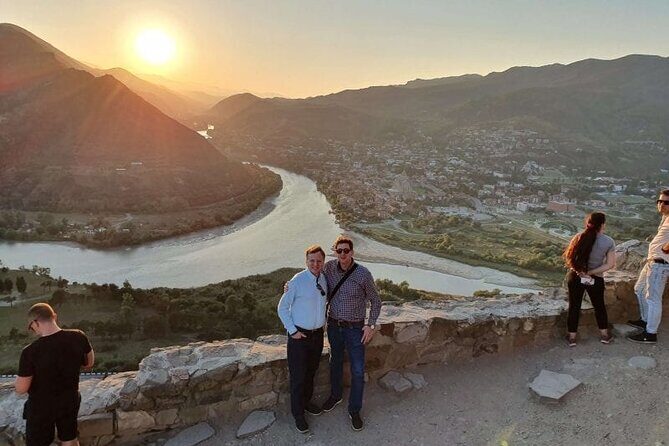
- Jvari Monastery: quick UNESCO stop with big river views
- Uplistsikhe Cave Town: 3,000 years underground, with an entry decision
- Gori coffee break: small pause, smart energy reset
- Mtskheta: old capital energy before the main church
- Svetitskhoveli Cathedral: the main Georgian church and the shroud story
- Chronicles of Georgia: Soviet giant by the Tbilisi sea
- How the route feels: timing, pacing, and why private works
- Price and value: is $68 per person a fair deal?
- Who this tour is best for (and who should rethink it)
- Should you book this Mtskheta-Jvari-Uplistsike-Chronicle of Georgia private trip?
- FAQ
- How long is the private trip?
- Does the tour include hotel pickup in Tbilisi?
- Is this a private tour or a group tour?
- Is the tour offered in English?
- Which major stops are included?
- Are entrance tickets included?
- How much time do you spend at each stop?
- What if the weather is bad?
- Where does the tour end?
Key points you’ll feel in real life
- Hotel pickup + private car means you can set your own pace and skip the hassle of public transport planning.
- Jvari Monastery (UNESCO) is a quick, high-impact stop with admission included.
- Uplistsikhe Cave Town is the big “wow” hour, and entry may cost 15L per head if you go inside.
- Svetitskhoveli Cathedral is a major spiritual landmark, with admission included.
- Chronicles of Georgia is a Soviet-era giant right near the Tbilisi sea, also included.
- Guide quality matters here, and English-speaking guides (like George, Nika K., Karlo, Racho, and Irene) earn top praise for patience and flexibility.
A private circuit that makes regional history feel close
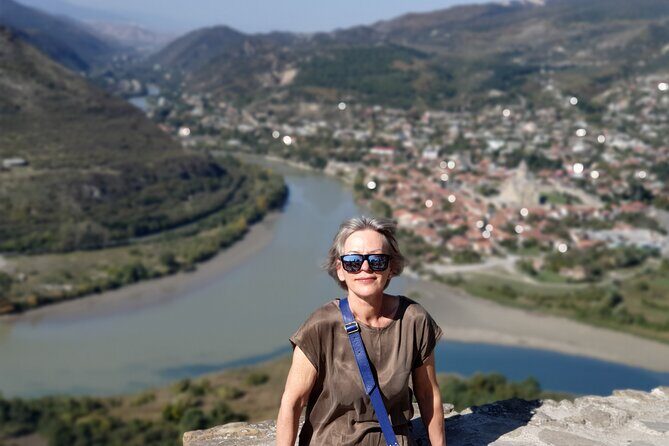
This trip works because it’s a smart stack of nearby essentials: the religious roots near Mtskheta, an ancient underground city, a short pause in Gori, then back to Tbilisi for the big monument hit. Instead of choosing one “main thing,” you get the full arc of Georgian history in one day.
You’ll start with pickup from your hotel, then settle into a clean, modern car or van. The private setup matters more than you might think. When you can stop when you need to, it turns a “checklist day” into something you can actually enjoy, take photos, and ask questions in.
And yes, it’s a lot to fit in. That’s also why private time is a lifesaver: guides can adjust to how your group is doing, whether it’s slow walking, extra photo stops, or simply wanting a better coffee break.
You can also read our reviews of more private tours in Tbilisi



Jvari Monastery: quick UNESCO stop with big river views
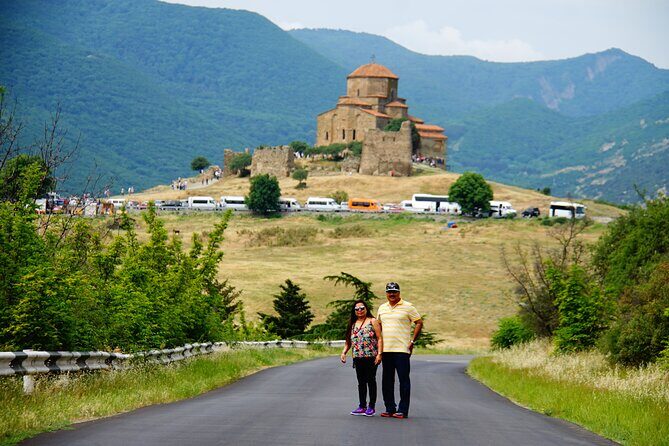
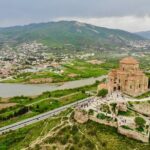
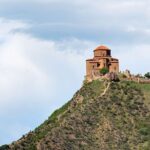
Jvari is one of those places you understand fast. It’s historic, it’s UNESCO-linked, and it gives you that “how did I miss this?” feeling even if you’re not a dedicated monument person.
You’ll have about 40 minutes here, and admission is included. It’s long enough to walk, read the scene, and get your photos without feeling like you’re late for the rest of the day.
Why it’s worth it:
- Jvari sits above the region and is tied to Georgia’s early Christian story.
- It’s a strong contrast point right before you move into Mtskheta’s cathedral complex.
- Even on a jam-packed schedule, it’s short and efficient.
Practical tip: wear shoes you trust. Stones around monasteries can be slippery, and you’ll want stable footing before you start chasing the best viewpoints.
Uplistsikhe Cave Town: 3,000 years underground, with an entry decision
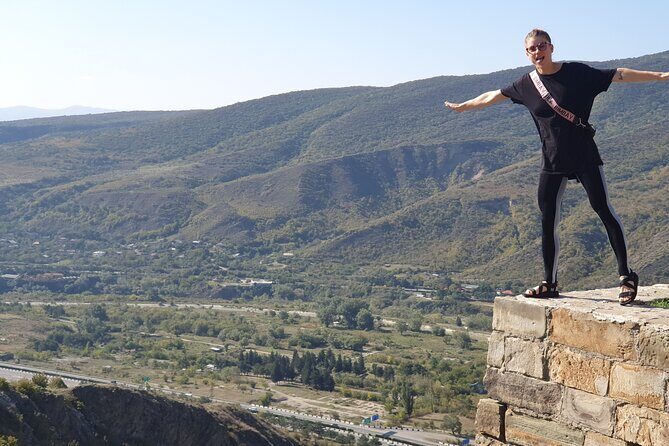
Uplistsikhe is the day’s most unusual stop, and the one people tend to remember later. It’s described as a 3000-year-old pagan cave city, and that “pagan” word is a clue: this isn’t just Christian Georgia. It’s the older layers that sit under the later story.
You’ll spend about one hour here. The tour notes that if you decide to enter, the ticket costs 15L per head. So the key is to think of this stop as two experiences:
- outside viewing and context (built into the stop)
- optional cave entry, which changes the depth of the visit
Why you should consider paying to go in:
- Cave towns are physical history. You don’t just look at a ruin; you feel how people lived with the rock itself.
- It helps explain Georgia’s long relationship with trade routes. One guide-powered highlight in this day is the Silk Road-era importance of the settlement.
The catch: caves mean uneven ground and tight spaces. If you’re short on mobility, claustrophobic, or traveling with kids who hate enclosed areas, you might still enjoy the exterior and skip the deeper entry.
Gori coffee break: small pause, smart energy reset
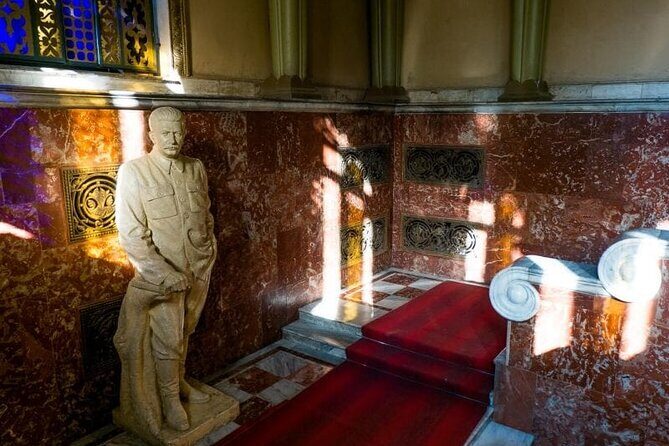
Gori is kept brief—about 20 minutes—mostly as a practical break in the middle of a full day. Think of it as your “refuel and reset” moment: quick coffee, bathroom stop, and a chance to breathe before returning to sites that pull you back into history mode.
You won’t feel like you’re missing a big attraction here because the day’s heavier hitters come later. It’s a useful design choice: you get momentum instead of fatigue.
Mtskheta: old capital energy before the main church
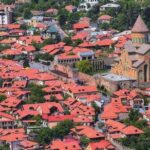
Mtskheta is where the spiritual story starts to feel grounded. You’ll have about one hour here, and admission isn’t listed as a separate cost for this portion.
As the old capital of Georgia, Mtskheta is more than a location on a route. It’s a “place names still matter” kind of stop. Even if you only spend an hour, the setting helps connect Jvari’s monastery viewpoint to the big cathedral stop that comes next.
Practical tip: if you care about photos, ask your guide where they think the best angles are. In the feedback I’ve seen from this trip style, some guides actively help with picture timing and angles, not just facts.



Svetitskhoveli Cathedral: the main Georgian church and the shroud story
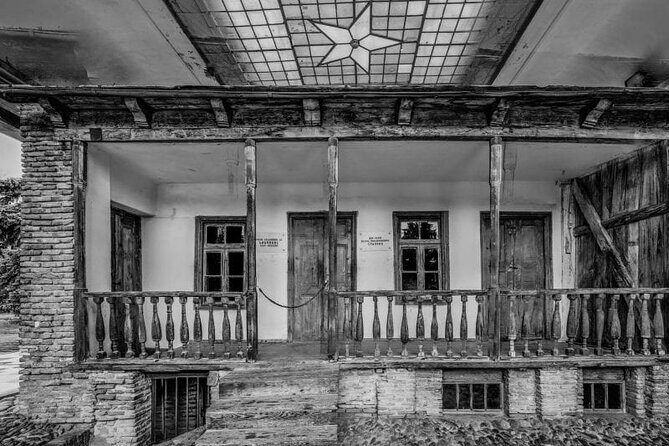
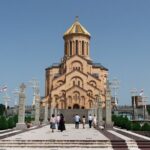
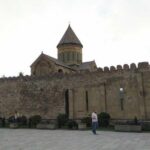
Then you hit Svetitskhoveli Cathedral, one of the centerpieces of the day. Admission is included, and you’ll have about 30 minutes on-site.
The cathedral is described as the main church in Georgia, and it’s also tied to a famous relic story: a shroud of Jesus is said to be buried here. Even if you treat that story as faith-based history, it still adds emotional weight to the architecture and the atmosphere.
Why this stop lands:
- It’s central, not a side church. You can feel that when you’re inside.
- The time allotment is realistic. You won’t feel rushed through major highlights, but you also won’t lose the day to endless wandering.
What to do with your 30 minutes: don’t try to “see everything.” Instead, pick a couple of moments—entry, key interior area, and then one exterior photo—to anchor the memory. A private guide can point you toward what matters most so you don’t burn time guessing.
Chronicles of Georgia: Soviet giant by the Tbilisi sea
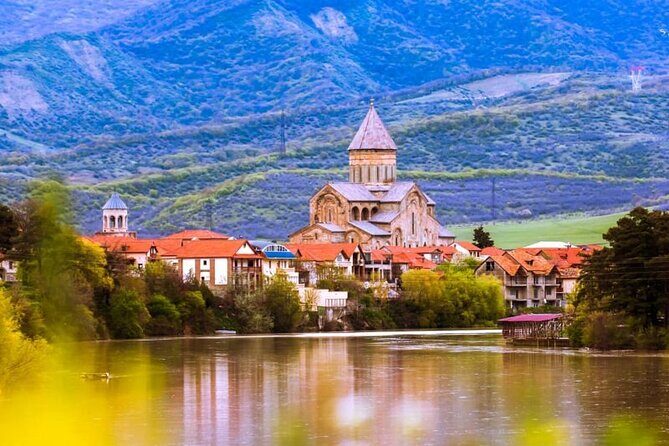
Next comes a sharp turn—Chronicles of Georgia. This is a huge Soviet-time monument next to the Tbilisi sea. You’ll have about 30 minutes, and admission is included.
It’s a fascinating contrast because the day is otherwise dominated by ancient religious and older cave settlement history. This monument adds the modern chapter: how nations remember themselves, how power gets built into stone, and how big public ideas show up in everyday places.
Why I think it’s valuable:
- It prevents the trip from feeling like only medieval Georgia.
- It gives you a visual sense of twentieth-century identity in the country.
- It’s easy to fit in because 30 minutes is plenty for the main viewpoints.
Practical tip: bring a light layer even in mild seasons. Monument stops can get breezy, and you’ll be standing around for photos and viewpoints.
How the route feels: timing, pacing, and why private works
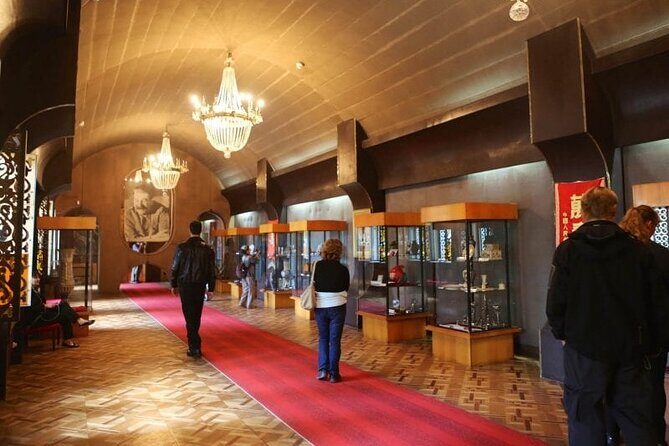
This day typically runs 7 to 8 hours. That’s long enough that you need the right kind of transport and the right kind of guide. The best part of this trip style is that the car/van is doing the heavy lifting while you focus on enjoying each stop.
In the feedback for this experience, a common praise theme is how guides handle real conditions—rainy or windy weather included—and still get you to where you need to be. I’d treat that as your clue to ask questions early. If you want slower walking, fewer stairs, more photo time, or a specific coffee stop, say it at pickup. A good guide will work with that.
One more small but meaningful advantage: the tour is described as private, meaning only your group participates. That lowers the stress level. You don’t feel pressured to keep up with strangers, and you can pause for something you actually care about.
Price and value: is $68 per person a fair deal?
At $68.00 per person for roughly 7–8 hours, this is priced like a “you’re paying for convenience plus entry where included” trip. The value depends on what you want out of the day.
Here’s what you’re paying for:
- Private pickup and a car to link multiple regions without the hassle
- English-speaking guidance
- Admission included for key stops like Jvari and Svetitskhoveli
- Admission included for Chronicles of Georgia
- A guided hour in Uplistsikhe where cave entry may cost extra (15L per head) depending on what you choose
Where you can save or spend:
- If you skip cave entry, you’ll avoid the 15L per head cost and keep the stop more about context.
- If you love ruins and want the full cave experience, pay it and get the most from that hour.
Is it “worth it”? If you want a fast, guided overview with real highlights and minimal logistics work, yes. If you already know you want to wander on your own and don’t care about explanations at monuments, then you might not use the guide value as much. This trip is at its best when you enjoy learning as you go.
Who this tour is best for (and who should rethink it)
This one is a strong fit if:
- You want a first serious look at Mtskheta/Jvari/Svetitskhoveli and the contrast of Uplistsikhe plus Chronicles.
- You prefer comfort and control over the schedule.
- You care about having your questions answered in English rather than relying on a phone alone.
It may be less ideal if:
- You dislike long days with lots of stops. There’s no getting around that time math.
- You strongly dislike walking on uneven ground, especially if you plan to enter the caves at Uplistsikhe.
- You’re traveling in conditions that might reduce mobility; while the tour says most travelers can participate, private guides can still only adjust so much on rugged sites. Tell the provider what you need before you go.
A final practical note from the way guides run the day: several guides in this tour style are praised for being flexible with preferences. That means it’s worth communicating needs ahead of time, especially for families and anyone managing an injury or limited mobility.
Should you book this Mtskheta-Jvari-Uplistsike-Chronicle of Georgia private trip?
Book it if you want the best version of a “regional hits” day: UNESCO-linked monastery, Mtskheta cathedral centerpiece, an ancient cave city option, then a Soviet-era monument— all with pickup and a guide who keeps the day organized.
Skip—or at least reconsider if—your schedule is tight, you hate long drives, or you’re unsure you’ll pay for Uplistsikhe cave entry. In that case, you might prefer a smaller, single-focus outing.
If you do book, choose your expectations carefully:
- Go in ready to see a lot.
- Pick what you want to go inside (especially Uplistsikhe).
- Use the private format to slow down where it matters: better photos, more questions, and fewer rushing feelings.
FAQ
How long is the private trip?
It runs about 7 to 8 hours.
Does the tour include hotel pickup in Tbilisi?
Yes. Pickup is offered from your hotel location.
Is this a private tour or a group tour?
It’s private. Only your group participates.
Is the tour offered in English?
Yes, it’s offered in English.
Which major stops are included?
You’ll visit Jvari Church (UNESCO heritage), Uplistsiche Cave Town, a Gori coffee break, Mtskheta, Svetitskhoveli Cathedral, the Chronicles of Georgia monument, and then return to Tbilisi.
Are entrance tickets included?
Admission is included for Jvari Church and Svetitskhoveli Cathedral, and admission is also included for the Chronicles of Georgia. For Uplistsiche Cave Town, entry is optional and the cave ticket is noted as costing 15L per head if you decide to go in.
How much time do you spend at each stop?
The schedule lists about 40 minutes at Jvari, about 1 hour at Uplistsiche, 20 minutes for the Gori coffee break, 1 hour in Mtskheta, 30 minutes at Svetitskhoveli Cathedral, 30 minutes at the Chronicles of Georgia, and about 30 minutes back to your hotel.
What if the weather is bad?
The experience requires good weather. If it’s canceled due to poor weather, you’ll be offered a different date or a full refund.
Where does the tour end?
You’ll return back to your hotel in Tbilisi.