REVIEW · TBILISI
Uplistsikhe-Borjomi-Gori-Mtskheta
Book on Viator →Operated by Georgian Paradise · Bookable on Viator
One long day, Georgia’s big sights. You start at Tbilisi at 9:00 am and head straight to Jvari Church for a classic river-confluence panorama, then roll on to Borjomi’s mineral-water park, Gori’s museum stop, and Mtskheta’s revered cathedral.
I love the people-first feel. Guides such as Mamuka and Anna (also listed as Ani) bring a friendly, accommodating vibe, with explanations in both English and the local language, plus helpful tips for food and shopping along the way. I also like the built-in variety: mineral-water tasting in Borjomi, Soviet-era context in Gori, and carved history at Uplistsikhe.
The only real drawback is the pace. In a 7–9 hour day you’ll move often, and some admission items like the cable car and certain museums are not included—so budget a little extra.
In This Review
- Key highlights to look for
- The big idea: a private day that stitches Georgia together
- Getting from Tbilisi: timing, pickup, and how the day flows
- What you should mentally prepare for
- Jvari Church: where the view explains the place
- Practical note: admission timing
- The drive through Borjomi-Kharagauli National Park: the scenery interlude
- Borjomi Central Park: mineral water + cable car views
- Budget reality check
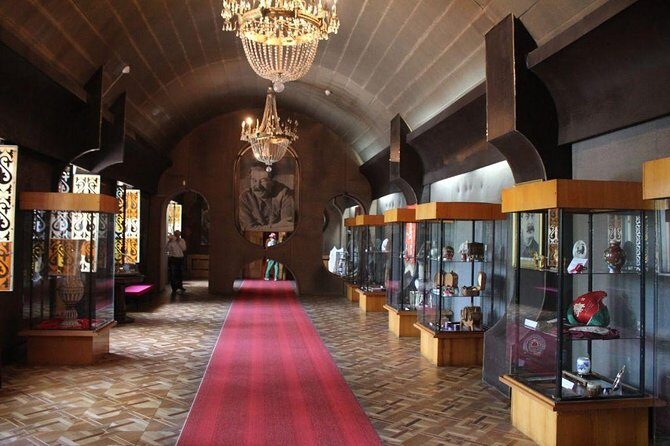
- Gori and the Stalin house-museum: history with local context
- Who this stop is for
- Uplistsikhe Cave Town: rock-hewn ruins that feel real
- Practical note: plan for walking and uneven surfaces
- Mtskheta’s Svetitskhoveli Cathedral: relics, dates, and meaning
- Value check: is the $179 private price fair for what you get?
- The one cost you may feel
- Who should book this tour?
- Should you book the Uplistsikhe–Borjomi–Gori–Mtskheta tour?
- FAQ
- How many people are in a group for this private tour?
- What time does the tour start, and where does it end?
- Is pickup offered from Tbilisi?
- How long does the tour take?
- Which stops have free admission?
- Are tickets included for the cable car, Stalin museum, and Uplistsikhe?
- Do I receive a mobile ticket?
- Can I cancel for a full refund?
Key highlights to look for
- Jvari Church views over Mtskheta and the point where two rivers unite (Aragvi and Kura/Mtkvari).
- Borjomi Central Park for drinking real mineral water and getting up high by cable car.
- Gori’s Stalin house-museum in the birthplace city of Joseph Stalin.
- Uplistsikhe Cave Town—a rock-hewn place with roots in the Bronze Age and a long run through medieval times.
- Svetitskhoveli Cathedral in Mtskheta with multiple revered Orthodox sanctities kept inside.
The big idea: a private day that stitches Georgia together
This is the kind of route that feels efficient without feeling rushed in spirit. You’re not just ticking off landmarks; you’re moving through different “chapters” of the country—early Christian worship and big river views, nature and mineral water, 20th-century politics, and then rock-hewn pre-Christian ruins before landing back in Mtskheta for one of Georgia’s most important cathedrals.
Because it’s private (up to 3 people in your group), the pace can feel more tailored than a crowded bus day. You’re also not stuck translating everything yourself; a driver-guide keeps the story threaded together while you’re in motion.
And yes, it’s a long day. But it’s the kind of long day that keeps paying off with each stop.
You can also read our reviews of more tours and experiences in Tbilisi.


Getting from Tbilisi: timing, pickup, and how the day flows
The tour starts at 9:00 am in Tbilisi and returns back to the same meeting point. Duration runs about 7 to 9 hours, which usually means you’ll be seeing a lot from the road, then doing concentrated visits at each main site.
One practical advantage: pickup is offered. That matters in Tbilisi, where getting out to the countryside quickly can be the difference between a smooth day and a stressful one.
Also, you get a mobile ticket. That’s a small thing, but it cuts down on fiddling around when you arrive.
What you should mentally prepare for
- Several driving segments (including scenic countryside along the way).
- Shorter on-site time windows at each place, because the route needs to cover multiple regions.
- Some stops are free entry; others require paid admission.
If you’re the type who likes to linger, I’d treat this as a “best of in one day” plan rather than a slow-study tour.
Jvari Church: where the view explains the place
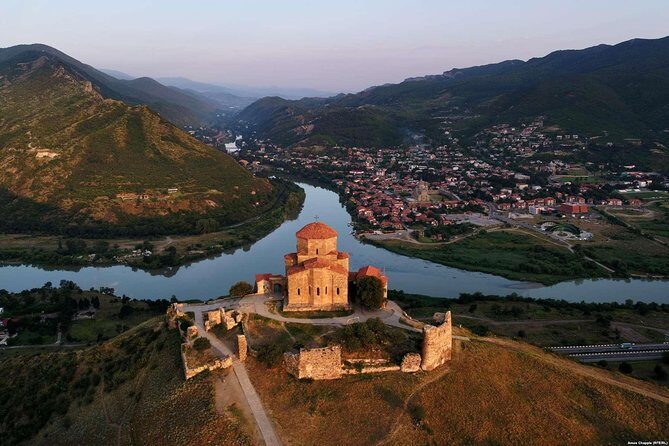
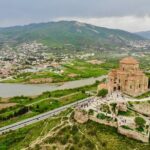
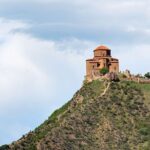
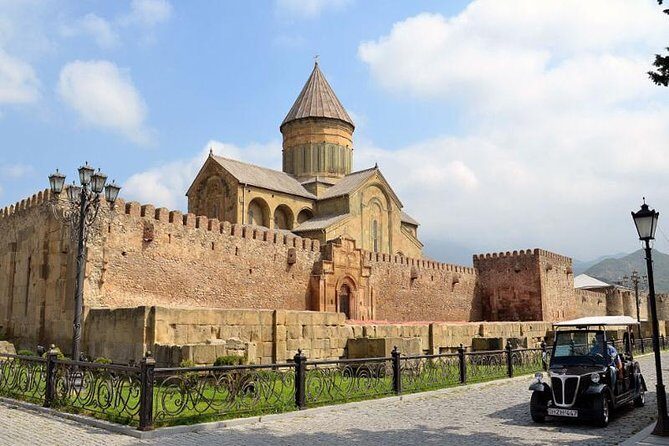
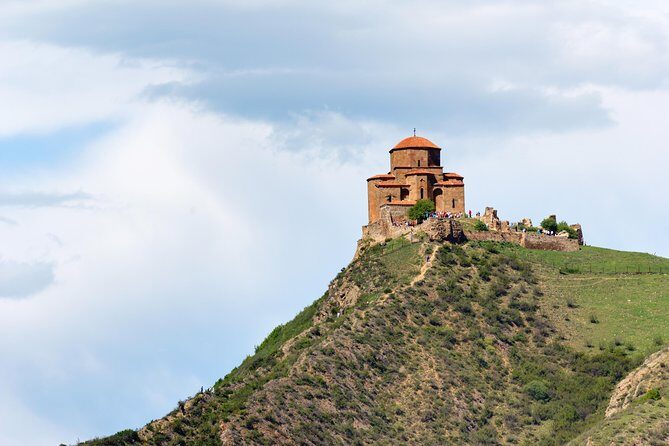
Jvari is one of those sites where the surroundings do half the teaching. After you leave Tbilisi, you’ll head to the monastery complex and get the panorama that people come for: mountains that look wave-like, a sweeping view over Mtskheta, and a clear visual idea of where Aragvi and Kura/Mtkvari come together.
The structure itself has layered dating that helps you understand Georgia’s long timeline. Construction began in the 4th century, in the period right after Christianity took hold in Georgia. The main large church was then built in the 11th century—so you’re standing somewhere with both early foundation and later monumental form.
Practical note: admission timing
Admission is listed as free, and the visit is set at about 30 minutes. That’s enough time to take in the viewpoint, snap photos, and get a basic handle on why this location mattered.



The drive through Borjomi-Kharagauli National Park: the scenery interlude
On the way toward Borjomi, you’ll pass by the Borjomi-Kharagauli National Park area. Even without getting out for a long hike, this is a meaningful segment of the day because it changes the mood from city-and-church to mountains-and-forest.
This matters because Borjomi itself is more enjoyable when you’ve already seen the scale of the protected area. The park is described as one of the largest in Europe, so the region already feels important before you even reach the town.
You’re basically using the car time well here: the road becomes part of the experience, not a chore.
Borjomi Central Park: mineral water + cable car views
Borjomi Central Park is the relaxed counterweight to all the sightseeing. Here, you can drink natural mineral water—the classic Borjomi. It’s the kind of stop that sounds simple, but it’s genuinely memorable because it’s tied to a specific place, not a generic tourist drink.
You’ll also walk through the park area where you can see the diversity of nature and a waterfall along the way. The tour sets this stop at about 45 minutes, which is enough for a slow wander, a water break, and getting oriented.
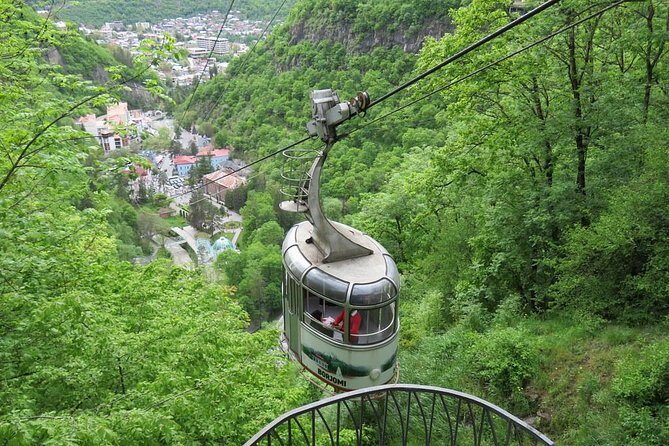
Then comes the payoff for people who like big views: you can take the cable car up to a plateau above Borjomi, where there’s a lake over the city and outstanding city-and-mountain perspectives from the top.
Budget reality check
Cable car admission is listed as not included, so don’t be surprised when you pay at the point of use. If you’re trying to keep costs tight, still do the mineral water and park walk—those parts are already worth it.
Gori and the Stalin house-museum: history with local context
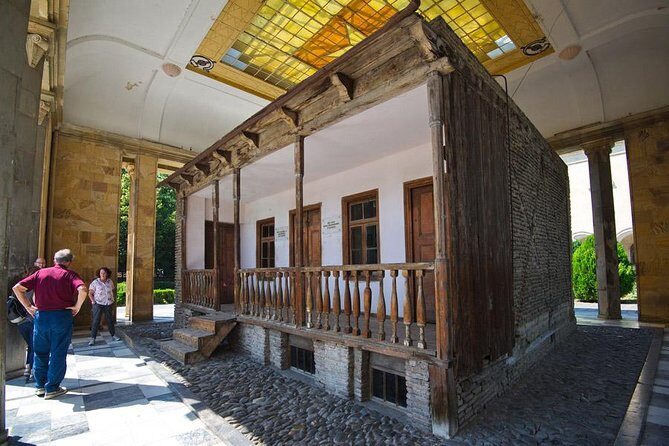
Next you’ll arrive in Gori, the birthplace city of Joseph Stalin (Dzhugashvili). Even if you don’t have strong feelings about Soviet history, the stop works because it’s not treated like distant theory. It’s anchored in a real city setting.
Gori is described as being in the Kartlia valley, at a confluence of the Kura and Liakhi rivers, backed by mountains to the south and west. That geography detail helps you see why cities like this mattered along major routes and resources.
The tour time for this stop is about 40 minutes, and admission for the museum is listed as not included.
Who this stop is for
If you like political history, this is a clear, focused entry point. If you prefer strictly medieval architecture, think of it as a contrast chapter—Georgia isn’t only church domes and cave towns. The modern world is part of the story too.
Uplistsikhe Cave Town: rock-hewn ruins that feel real
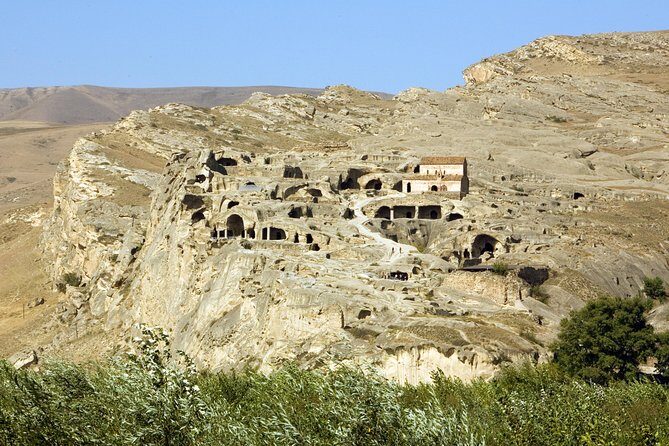
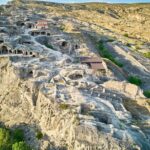
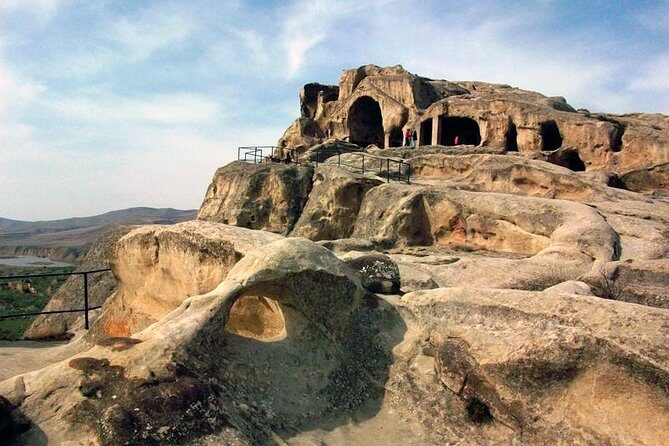
Uplistsikhe is the stop that gives this day its wow-factor. You’ll travel from Gori to the Uplistsikhe Cave Town, known as the Lord’s Fortress in translation.
Here’s what makes it special: it’s an abandoned rock-hewn town with deep time written into the stone. The place was founded around 1000 BC (late Bronze Age) and continued to be inhabited until the 13th century AD. Between the 6th century BC and the 11th century AD, it served as one of the most important political and religious centers of pre-Christian Kartli—one of Georgia’s earlier state predecessors.
At its peak, it’s described as housing up to 20,000 people, which gives you a sense of scale when you look at the built areas. What you visit today includes the Shida Qalaq, described as roughly 40,000 square meters.
Practical note: plan for walking and uneven surfaces
Because it’s a cave/rock-town site, you should expect outdoor walking and stone steps or uneven ground. This is one reason the tour says most travelers can participate—because the route assumes you’re comfortable doing a moderate amount of moving around.
Admission is listed as not included, and the visit is about 40 minutes. In that time, you’re not trying to master archaeology—you’re getting a strong first look at how ancient people shaped daily life into the landscape.
Mtskheta’s Svetitskhoveli Cathedral: relics, dates, and meaning
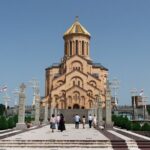
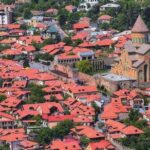
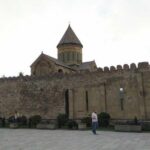
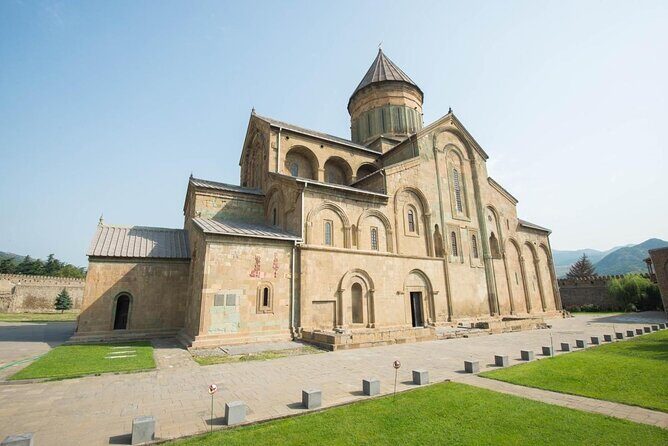
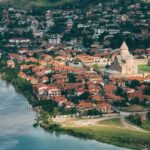
After Uplistsikhe, you’ll return to Mtskheta, Georgia’s old capital. The final big spiritual stop is Svetitskhoveli Cathedral.
What I like here is how specific the cathedral’s significance is. Construction started in 1010 and finished in 1029, and the place is associated with four great sanctities of the Orthodox world kept within. The tour lists them as:
- the Mantle of Isaiah the prophet
- the robe of Jesus Christ
- a particle of Andrew the Apostle
- a Wood Cross, with small particles of the cross on which Jesus Christ was cast
That’s a lot to hold at once, but the short visit (about 30 minutes) is exactly what you want for a final stop. You get the main cathedral experience and the big “why this matters” context without turning the day into a graduate course.
Admission is listed as free, which is a nice end-of-day bonus.
Value check: is the $179 private price fair for what you get?
At $179 per group (up to 3), this works out best when you travel with someone. For couples or small friend groups, it’s a smart way to get private guiding on a route that would otherwise be a hassle to coordinate.
Here’s where the value comes from:
- You’re paying once for transport plus a guide, covering multiple regions in one go.
- Some major sites are free (Jvari and Svetitskhoveli), which offsets part of the day’s admission costs.
- You’re getting structured time blocks at each stop, including the cable car option, the museum, and the cave town.
The one cost you may feel
Admission is not included for Borjomi’s cable car, Gori’s Stalin museum, and Uplistsikhe. So your final spending depends on what you choose to do inside those ticketed sections. If you’re trying to keep everything strictly minimal, you can still enjoy the free cathedral and church viewpoints plus Borjomi’s park water and walking segment.
Who should book this tour?
This is a great match if you want:
- a private, friendly guide-led day instead of a crowded group bus
- a route that mixes nature + architecture + history
- a good intro to central/eastern Georgia beyond Tbilisi
It may not be ideal if:
- you hate long drives
- you want deep time at one site instead of short visits across many
Should you book the Uplistsikhe–Borjomi–Gori–Mtskheta tour?
If your idea of a great day is variety with real place-based stops, I think this is a strong yes. Jvari gives you the sweeping “Georgia postcard” view. Borjomi gives you something physical you can taste and then pair with a high-view cable car ride. Uplistsikhe adds a different kind of history that feels tangible, not just museum-based. Then Svetitskhoveli caps it with a cathedral that’s loaded with meaning and dates you can actually remember.
Book it if you’re traveling with up to two other people and you want a guided route that feels personal. Just be ready for the ticketed add-ons and the fast pace of a 7–9 hour plan.
FAQ
How many people are in a group for this private tour?
This is a private tour/activity. Only your group will participate, and the price is listed per group up to 3 people.
What time does the tour start, and where does it end?
The tour starts at 9:00 am in Tbilisi, Georgia. It ends back at the meeting point.
Is pickup offered from Tbilisi?
Yes, pickup is offered, and the tour is based around meeting in Tbilisi.
How long does the tour take?
The duration is listed as approximately 7 to 9 hours.
Which stops have free admission?
Jvari Church and Svetitskhoveli Cathedral list admission as free.
Are tickets included for the cable car, Stalin museum, and Uplistsikhe?
No. The tour notes that admission is not included for the Borjomi cable car, the Stalin house-museum, and Uplistsikhe Cave Town.
Do I receive a mobile ticket?
Yes. A mobile ticket is included.
Can I cancel for a full refund?
Free cancellation is available. You can cancel up to 24 hours in advance for a full refund. If you cancel less than 24 hours before the start time, no refund is provided.