Soviet Tbilisi has layers you can’t see fast. This tour threads you through the Soviet marks still hiding in everyday streets, from monumental buildings to an underground propaganda workshop.
What I love most is the small-group feel and the history-focused local guide energy, with names like Giorgi and Irakli popping up in the way the tour is delivered.
The main heads-up is simple: you will spend most of the time walking-and-riding between sites, so it helps to be ready for a steady pace.
In This Review
- Key highlights at a glance
- A Soviet-era lens that makes Tbilisi click
- Meeting at Rose Revolution Square, then going off-script
- Stop 1: Real Georgia Tours and the non-touristic Soviet fabric
- Stop 2: Bank of Georgia’s Soviet-modern silhouette
- Stop 3: Chronicles of Georgia, the Socialist monumental “Stonehenge” feel
- Stop 4: Stalin’s Underground Printing House Museum
- How the guide experience really changes the tour
- Time, comfort, and pacing for a 3 to 4 hour plan
- Price and value: $99 that mostly makes sense
- Where this tour fits in your Tbilisi itinerary
- Should you book Soviet Tour – Hidden Tbilisi?
- FAQ
- How long is the Soviet Tour – Hidden Tbilisi?
- How much does the tour cost?
- What group size should I expect?
- Is the tour offered in English?
- What is included in the price?
- Are admission tickets included for all stops?
- Do I need to arrange my own transport to the meeting point?
Key highlights at a glance
- Up to 6 people means more questions and less time waiting around.
- English-speaking local guides bring architecture and politics into one story.
- Air-conditioned vehicle keeps you moving comfortably through the city.
- 4 Soviet-history stops include a mix of paid and free entries.
- Unusual sights beyond the main tourist route help you see a different Tbilisi.
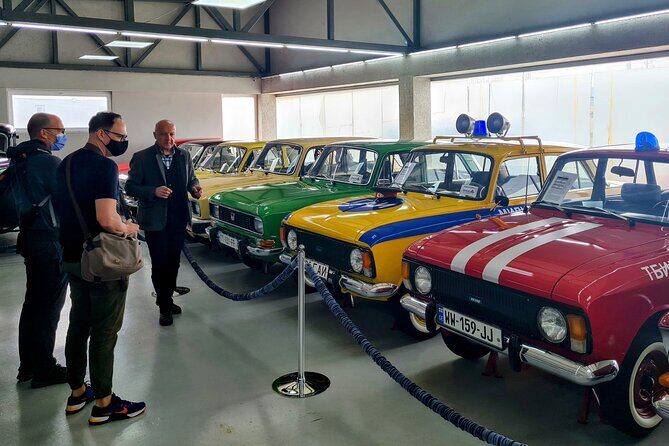
- Optional extra time may be available at a Soviet car museum, if you choose it.
A Soviet-era lens that makes Tbilisi click
Tbilisi can look totally normal at street level. Then you start spotting the design logic of the Soviet period: bold forms, practical mass-building ideas, and propaganda-scale statements meant to last.
I like that this tour does not treat Soviet history like a museum display behind glass. It shows you how the style affected how buildings were used, how they were positioned, and why certain spots feel intentionally dramatic. And yes, you also get the fun angle: learning why some familiar characters were banned in certain communist-era contexts.
You’ll be in an air-conditioned vehicle between stops, but the real payoff is that your guide helps you read details. That means you’re not just seeing structures—you’re understanding why they look the way they do.
You can also read our reviews of more tours and experiences in Tbilisi.



Meeting at Rose Revolution Square, then going off-script
Your day starts right at 2 Rose Revolution Square, and the tour ends back at the same place. That matters because Rose Revolution Square is easy to find and serves as a clean reset point if your wider day in Tbilisi runs long.
The route is built for short site-to-site hops across the city, not a single long walk from one end to another. Also, with a maximum group size of six, you’re less likely to get stuck listening at a crowded curb while everyone else blocks your view.
One practical tip: since transfer to and from the meeting point is not included, plan your transport ahead. If you’re coming from elsewhere in Tbilisi, give yourself buffer time so you’re not sprinting at the start.
Stop 1: Real Georgia Tours and the non-touristic Soviet fabric
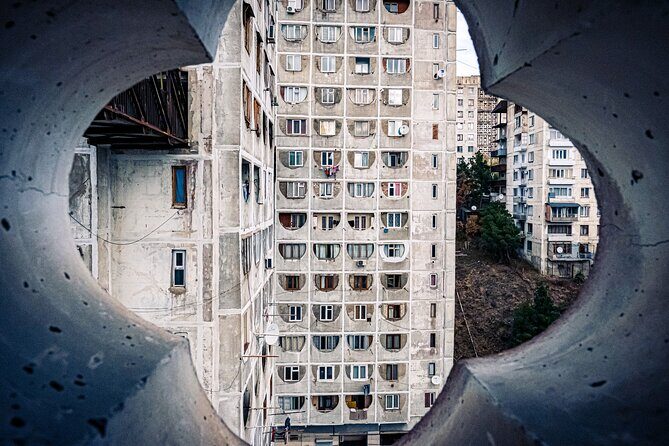
The first stretch takes you through the parts of Tbilisi that usually get skipped. This is where the tour earns its name, because your guide pulls you toward Soviet-era monuments and buildings distributed across the city rather than only hitting the most obvious photo stops.
Expect about two hours here, with entrance included. That timing is useful. It gives you enough minutes at each location to notice the style—mass shapes, heavy materials, and the kinds of civic statements Soviet architecture made in public space.
The best part is how your guide connects form to function. You might hear explanations about how certain buildings were designed for collective use, how political messaging was built into the scale, and how the Soviet period still shapes the feel of neighborhoods today.
A small heads-up: because this is the longest stop, you’ll want comfortable shoes. If you’re only okay with light walking, you’ll feel it more here than in the shorter 15- to 40-minute stops.
Stop 2: Bank of Georgia’s Soviet-modern silhouette
Then you switch gears to a quick hit: the Bank of Georgia head office. It’s listed among the top examples of Soviet architecture, and the building’s shape is not random—you’ll hear the pragmatic reason behind it during the stop.
This is a short stop—about 15 minutes, and entry is free. That makes it a good break from longer explanations. You can take photos, look for the architectural cues, and move on without the tour dragging.
What I like about putting this stop at the second position is that it starts tightening your “Soviet reading skills.” After the first broader exploration, you begin to recognize patterns faster—how political era priorities show up in structure, not just signage.
Stop 3: Chronicles of Georgia, the Socialist monumental “Stonehenge” feel
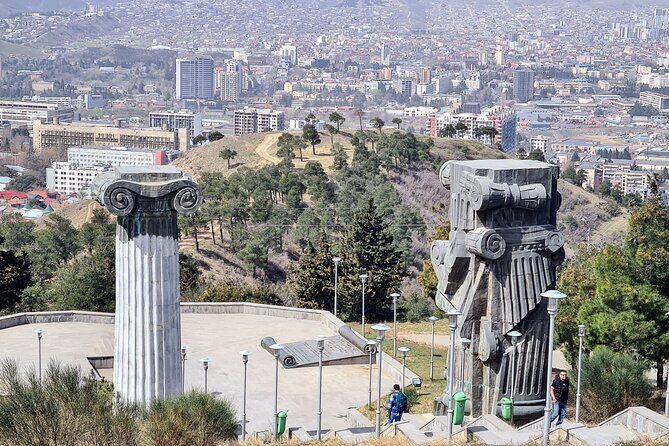
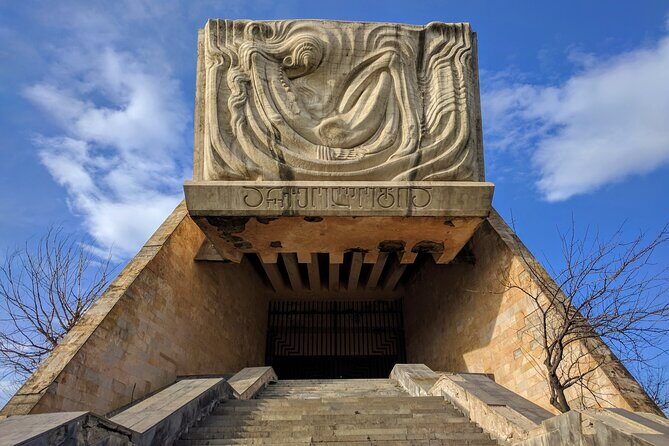
Next comes one of the most striking Soviet-style landmarks in Tbilisi: Chronicles of Georgia. It’s often described as the Stonehenge of the city, and the idea is easy to understand when you get the monumental scale and the surrounding panorama effect.
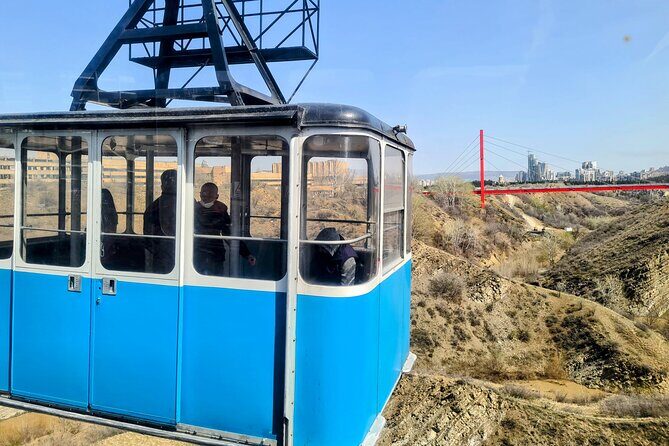
This stop runs about 30 minutes, and entry is free. The time window is just right for two things: soaking in the view over Tbilisi’s suburbs and learning what Socialist monumentalism was trying to communicate.
Monumental propaganda sounds heavy—and it can be—but this stop stays grounded because your guide links it to real geography and everyday city perception. You end up looking at the suburbs like they’re part of the message, not just the background.
If you’re the type who loves views but hates tourist crowds, this is one of the better stops to prioritize. Even though it is famous, the tour context makes you look beyond the postcard angle.






Stop 4: Stalin’s Underground Printing House Museum
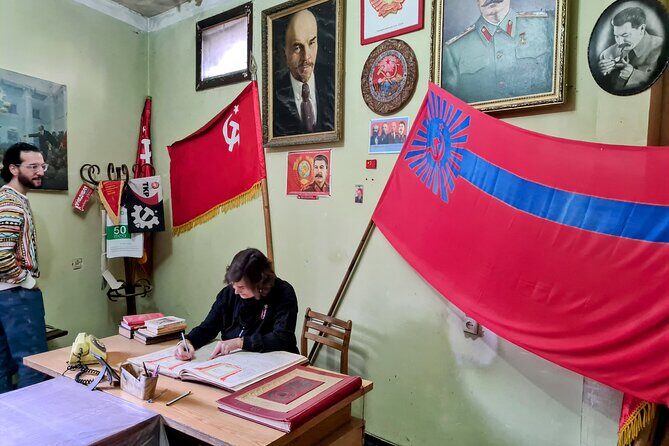
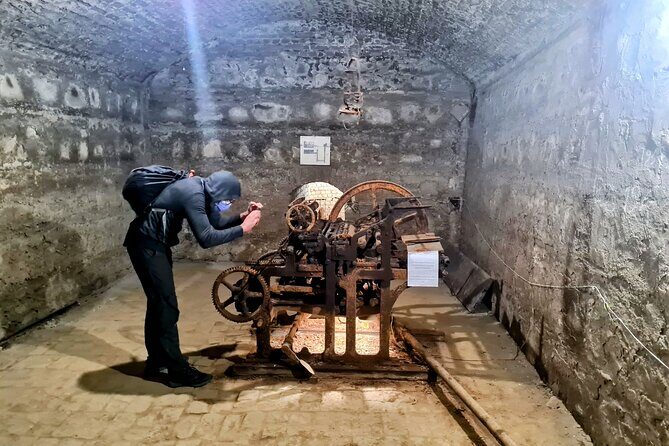
The final major stop is the most atmospheric: J. Stalin’s Underground Printing House Museum. You’re going underground—or at least into the idea of it—and learning how planning and propaganda leaflets were produced by Stalin and his supporters.
Plan about 40 minutes here, and entry is included. This is the stop where the tour feels most direct about power and control. You get to see how the machinery of messaging worked, and the underground setting adds a sense of pressure that you simply cannot get from reading history books at home.
I also like that the tour doesn’t stop at facts. Your guide frames what you’re seeing in terms of how Soviet systems used institutions and spaces. It’s not only about one leader. It’s about how the era built an entire ecosystem for influencing public thought.
If you prefer light and scenic history, this is your heavier chapter. But it’s also the most memorable one, and it closes the loop nicely with the earlier monumental stops.
How the guide experience really changes the tour
The biggest difference between a good architecture tour and a great one is the guide. Here, the guide quality shows in the pacing and in the way explanations stay connected to what you can actually see.
I found it especially compelling when guides like Irakli and Giorgi answer questions without rushing you. They also help you notice the “in-between” details—angles, scale, and layout choices—so the Soviet story feels less like theory and more like something built into city life.
In some departures, you may even get extra perspective from historians who manage the sites and share how they interpret Soviet-era remains today. That kind of add-on is not just extra information; it makes the experience feel more living, less scripted.
And yes, there can be a food moment at the end. One highlight I’d circle is a special khachapuri with bean fillings offered as a sweet-but-solid final touch. It’s a small thing, but it sticks because it turns the tour from only visuals into a full Tbilisi experience.
Time, comfort, and pacing for a 3 to 4 hour plan
The tour runs about 3 to 4 hours overall. With four stops spread out by car, the schedule is built to keep you from getting worn down.
Here’s how the timing shapes your day:
- The two-hour first stop sets context and gives you the most walking time.
- The 15- and 30-minute stops help you absorb specific architectural ideas without fatigue.
- The 40-minute underground stop finishes with emotional weight and a clear ending.
Because you’re using an air-conditioned vehicle, hot-weather days feel manageable. It also makes the tour more predictable if Tbilisi weather or street conditions shift.
One consideration: since the itinerary includes entrances at some stops and free entry at others, you might feel the differences in rhythm. Included-entry stops can feel more structured, while free entry stops give you slightly more independent viewing time with your guide nearby.
Price and value: $99 that mostly makes sense
At $99 per person, this is not a cheap “sit on a bus” tour. The value is in the combo: guided architecture context, air-conditioned transport, small group size, and included admissions for the longer and more formal sites.
You get entrance included at the first stop (Real Georgia Tours) and the underground museum. Meanwhile, two other famous architectural stops (Bank of Georgia and Chronicles of Georgia) are free to enter, which helps keep the experience moving without extra fees.
In practice, the price feels most justified if you:
- care about how architecture reflects power,
- want a guided reading of Soviet-era design choices,
- prefer a smaller group so you can ask follow-ups.
If you mainly want quick photos with minimal talking, the cost may feel heavier than it needs to be. But if you like learning while you walk, it’s a solid deal for 3 to 4 hours.
Where this tour fits in your Tbilisi itinerary
This tour works best when you want a second viewpoint. Pair it with a more general old-town walk on another day, so you can compare what Tbilisi looks like through different historical lenses.
It also fits well if you have limited time. Four well-planned stops in a compact time window means you don’t have to design your own Soviet-architecture route from scratch.
And if you’re a history type who appreciates the human story behind buildings, you’ll likely enjoy the way the guide ties propaganda spaces and monumental architecture into one timeline.
If you’re sensitive to heavier political content, know that the underground printing house is the emotional core. You can still enjoy it, but go in prepared for a more serious atmosphere.
Should you book Soviet Tour – Hidden Tbilisi?
I’d book this if you want Tbilisi that feels real, not just photocopied. The small group size, the guide-led architecture explanations, and the included access to key sites make it a strong value at $99.
Skip it—or at least consider another style of tour—if you want minimal walking and a purely scenic focus. Also, because there is no transfer included, you’ll want to arrive at Rose Revolution Square on time and under your own power.
If your interest is Soviet-era architecture, propaganda spaces, and why these buildings still shape how Tbilisi feels today, this is one of the more direct ways to get that story—without wasting hours hunting things down yourself.
FAQ
How long is the Soviet Tour – Hidden Tbilisi?
The tour lasts about 3 to 4 hours.
How much does the tour cost?
It costs $99.00 per person.
What group size should I expect?
This tour has a maximum group size of 6 people.
Is the tour offered in English?
Yes, it is offered in English.
What is included in the price?
You get an air-conditioned vehicle, exclusive access, and a professional local guide with a passion for history. Admission tickets are included for some stops.
Are admission tickets included for all stops?
Not all stops. Admission is included for the first stop and the underground printing house museum, while Bank of Georgia and Chronicles of Georgia have free admission.
Do I need to arrange my own transport to the meeting point?
Yes. Transfer to and from the meeting point is not included. The tour starts at 2 Rose Revolution Square and ends back there.