REVIEW · TBILISI
Mtskheta – Jvari + Gori – Uplistsikhe Tour
Book on Viator →Operated by Georgia Tour Factory · Bookable on Viator
Stone churches, Stalin, and caves in one day. This Mtskheta–Jvari–Gori–Uplistsikhe circuit ties together UNESCO history and some very human Georgian stories, all with in-car WiFi. It is a full day, but the structure keeps it moving without feeling rushed.
I love the hotel pickup and drop-off. You start the day already sorted, and you spend the ride in an air-conditioned car while your driver-guide handles the flow. I also love that it is built around a driver-guide who talks through what you are seeing, not just where you are going.
One possible drawback: weather can make the day feel longer. When it is raining, cold, or windy, you will be outside at viewpoints and sites more than you want, so bring layers and plan for some chilly moments.
In This Review
- Key highlights I’d circle on your map
- A fast day that links four time periods
- Price and what you really get for about $54
- Pickup, driver-guide, and comfort details that matter
- Jvari Monastery: the Cross church with the big river view
- Mtskheta UNESCO center and Svetitskhoveli Cathedral
- Gori’s Stalin House-Museum: history with sharp edges
- Uplistsikhe cave town: Fortress of God and rock-cut rooms
- Pacing that keeps the day from dragging
- What to bring: shoes, layers, and a water plan
- Who this tour is best for (and who should reconsider)
- Should you book the Mtskheta–Jvari–Gori–Uplistsikhe tour?
- FAQ
- Is pickup and drop-off included?
- Is this tour private or shared?
- Which entrance fees cost extra?
- How long does the tour take?
- Is WiFi and English support included?
- What is the cancellation and weather approach?
Key highlights I’d circle on your map
- Pickup from your hotel or any address in Tbilisi so you do not hunt for transport
- Driver-guide storytelling through four major stops with a smooth, private-group feel
- Jvari and Mtskheta are both UNESCO World Heritage sites with major Christian roots
- Stalin House-Museum and Uplistsikhe have extra entrance fees ($5 each per person)
- Air-conditioned car plus in-car WiFi helps on a long day
- Uplistsikhe involves real walking and steep rock sections so shoes matter
A fast day that links four time periods
This is the kind of day trip that works because it is “thick” with meaning. You start with an early Christian landmark perched above the confluence of two rivers. Then you drop into Mtskheta, Georgia’s ancient capital, and see why this place matters so much to Georgian identity. After that, you head to Gori for the Stalin House-Museum, which is history with a very close, personal edge. Finally, you finish in Uplistsikhe, an ancient cave city carved into rock, where the stone itself tells the story.
The pacing is built to keep you busy without making you sprint. You get a defined chunk of time at each major stop, and you also get the benefit of local context while you walk around. That context turns “I saw a church and caves” into “I understand what I’m looking at.”
If you like structure on vacation, this day delivers. If you hate being on a schedule at all, you may want a slower option with fewer stops.
You can also read our reviews of more tours and experiences in Tbilisi.


Price and what you really get for about $54
At $54.07 per person, the headline price looks straightforward. What makes it feel good value is that you get door-to-door pickup, private transportation, and an air-conditioned vehicle for a full day. For many visitors, that alone saves money and time versus arranging separate rides between sites.
There are also two paid entrances you should factor in. The Stalin House-Museum has an entrance fee of $5.00 per person, and Uplistsikhe Cave Town has an entrance fee of $5.00 per person. If you do both, plan roughly +$10 per person on top of the tour price.
So the real “budget picture” is closer to about $64 all-in for most adults, assuming you pay both extra entrances. For a one-day circuit covering four major stops, that is still competitive, especially when the tour is private to your group and you are not sharing the day with a large crowd.
Pickup, driver-guide, and comfort details that matter
This tour is set up to reduce friction. Your guide picks you up directly from your hotel or any address in Tbilisi, so you skip the stress of finding meeting points with bags, kids, or just jet lag.
You ride in an air-conditioned vehicle, which is not a small thing in Georgia’s seasons when temperatures swing. And because the day is long (about 8 hours), the in-car WiFi helps you stay connected, check maps, and cool your brain down for a bit between stops.
One of the most praised parts is the driver-guide. Guides such as George or Gogi (you may see different spellings, but the same role) come across as engaging and clear. The tone from the day’s accounts is consistent: they explain enough to make the sites click, and they also adapt to the group, including being patient if you have a child exploring the caves.
Jvari Monastery: the Cross church with the big river view
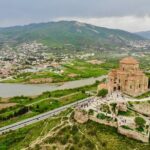
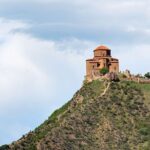
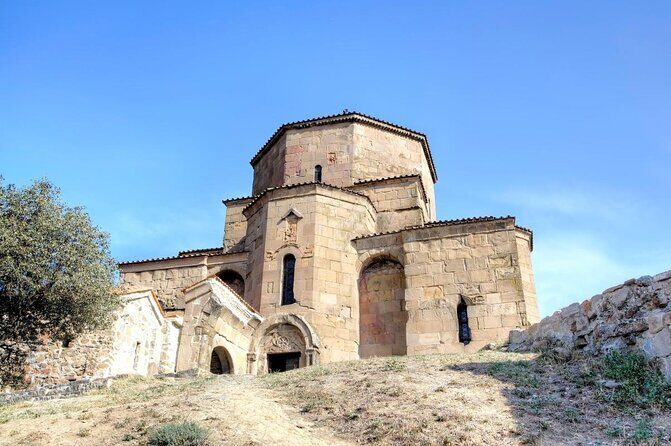
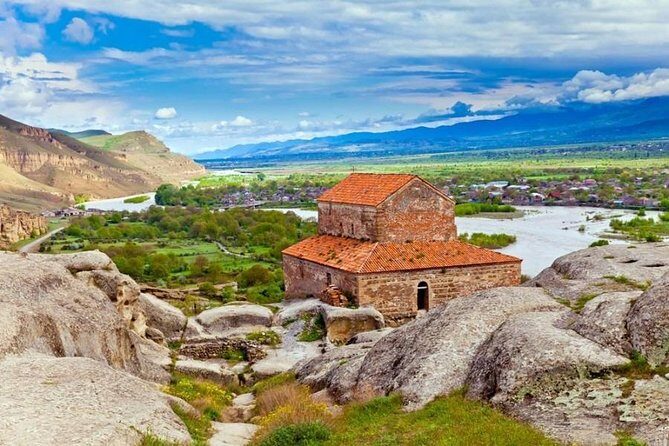
You begin at Jvari Monastery, a historic temple dating back to the 6th century. It sits on a high mountain near the ancient capital area, and it is famous for its architecture, its location, and its historical importance.
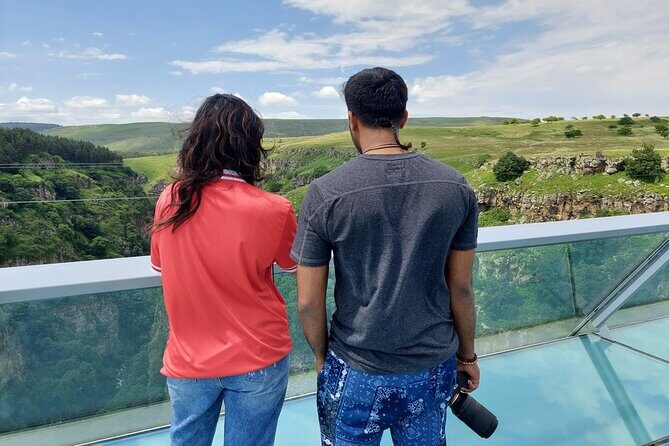
The view is the hook. You look out over the intersection where the Aragvi and Kura rivers meet. Even if you only spend a short time here, the scenery does a lot of emotional work. You instantly get why this spot became a landmark.
You also get the story behind the name. Jvari translates to the cross in Georgian, and your guide will explain the background as you stand at the viewpoints and look at the structure.
Plan for about 20 minutes here. That means you are not stuck waiting around, but you should come ready to walk a bit and take in the views. If it is raining or windy, this is also the spot where you will feel it most, since the mountain air can get cold fast.
Mtskheta UNESCO center and Svetitskhoveli Cathedral
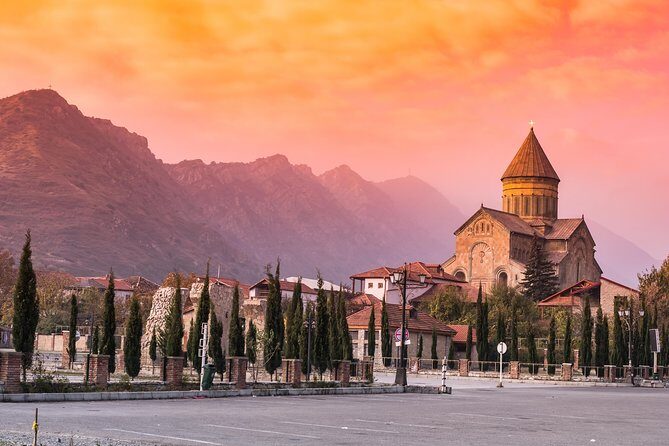
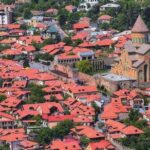
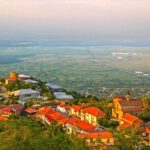
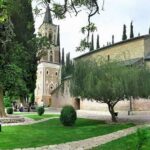
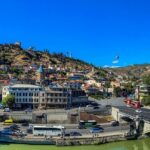
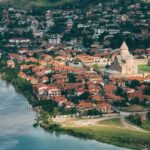
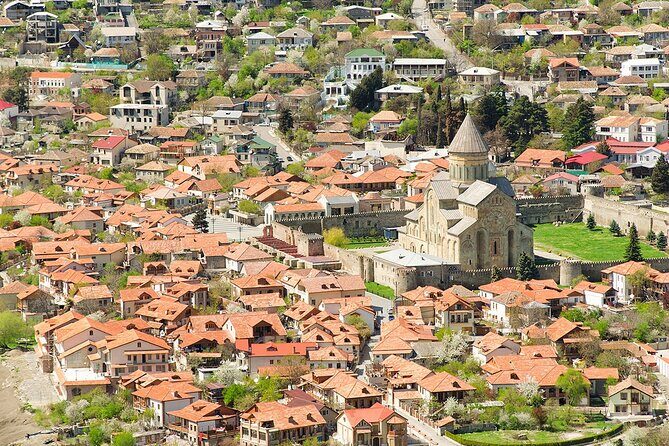
Next you head to Mtskheta, Georgia’s ancient capital and a UNESCO World Heritage Site. It has been inhabited for more than 2,600 years and served as the capital of the early Georgian Kingdom of Iberia.
From the parking area, you walk into the historical center. This is not a sterile museum zone. The streets are narrow and full of small shops, plus you may see wine tastings and traditional Georgian sweets along the way. It’s an easy place to stretch your legs before the main stop.
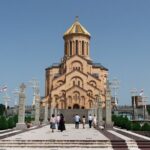
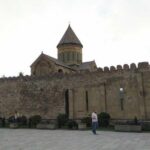
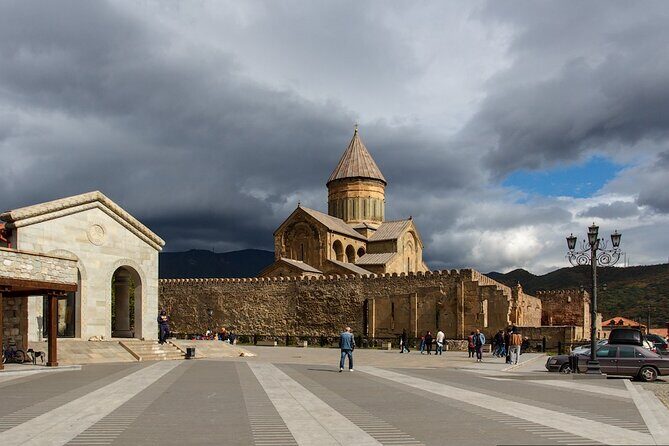
The highlight is Svetitskhoveli Cathedral, described as the burial site of Christ’s Robe and one of Georgia’s most sacred and revered places. This is where the day’s Christian thread becomes specific. Jvari sets the scene high above; Svetitskhoveli grounds it in a place with major religious meaning.
You get about 45 minutes here, with admission included as free for this stop. That is enough time to see the key parts without feeling trapped. If you want deeper time for photos or quiet, you can also use a portion of the walking time in the streets to slow down.



Gori’s Stalin House-Museum: history with sharp edges
Gori is next, and yes, it is known as Joseph Stalin’s hometown. This stop is not “fun history.” It is a direct look at power, politics, and personal artifacts tied to a major figure in 20th-century history.
You visit the Stalin House-Museum for about an hour. The experience includes his original house where he was born and key parts of his life on display, including his office and personal items such as his pipe, cigars, and telephone. You also see his railway carriage and additional museum materials.
One thing to consider: this museum has a $5.00 per person entrance fee that is not included in the tour price. If you are not particularly interested in Soviet-era history, you may still find the context valuable, but it is the most “ideological” stop on the day.
The upside is that your guide can put it into context as you walk through. And because the rest of the day is focused on religion and ancient rock-cut civilization, the shift to Stalin’s world feels like a meaningful contrast, not just another building.
Uplistsikhe cave town: Fortress of God and rock-cut rooms
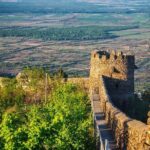
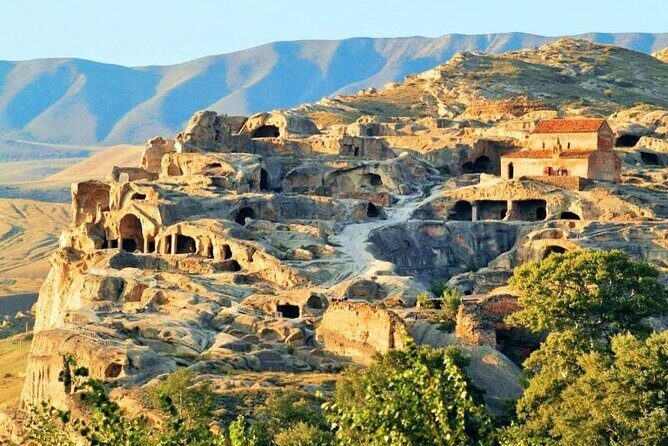
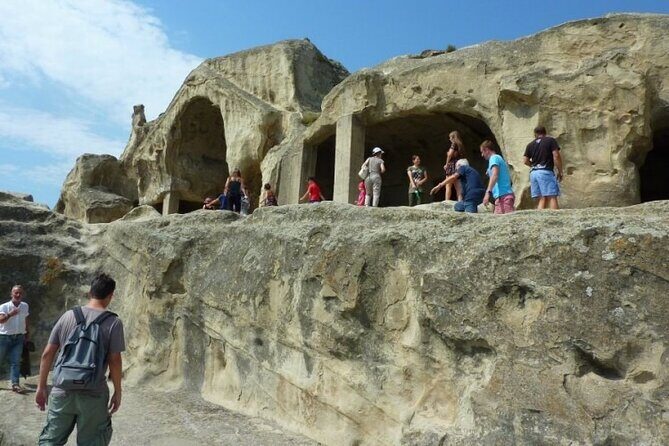
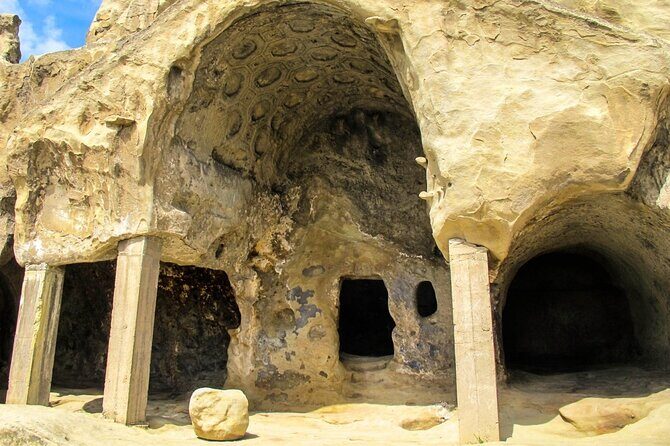
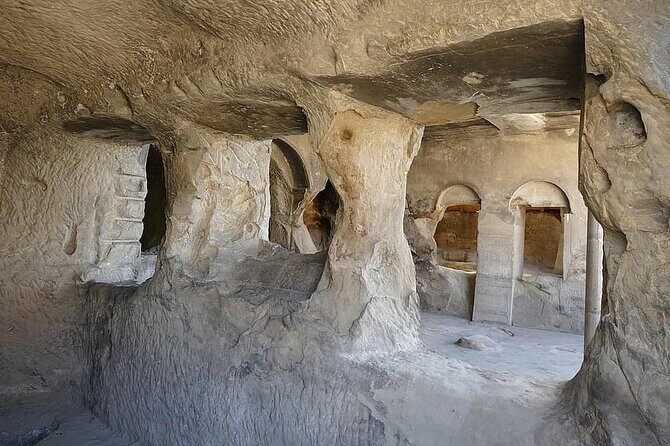
Uplistsikhe is where the day turns physical. It is the Fortress of God, an ancient 3,000-year-old cave city carved into rock. This place once mattered for Georgia’s culture, religion, and politics, and it is still visually stunning because parts from different periods remain.
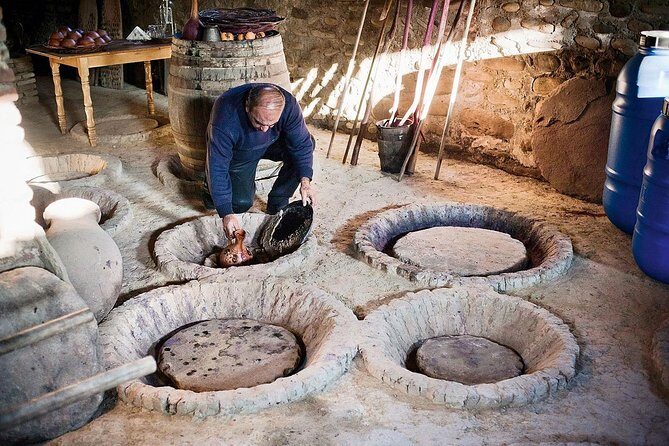
Today, about 150 caves remain, and you can see several major carved features during your visit. Expect to spot places like the tunnel, the Sun Temple, the Royal Hall connected with Queen Tamar, a winery area, a 6th-century church, an old library, and even an ancient pharmacy carved in stone.
Your time here is about 1 hour, and the entrance fee is $5.00 per person, not included in the tour price.
Practical reality check: Uplistsikhe involves uneven stone, steep sections, and lots of short climbs. One review-style caution you should take seriously is that signage may not help you pick the best routes. Also, in extreme heat, water availability might be limited, and some areas can feel dangerous to linger in without enough fluids.
If you go in hot months, bring water even if you think you’ll find it on site. If you go in cooler months, bring a jacket anyway. The caves can feel cooler inside, but the climbs outside can wear you out.
Pacing that keeps the day from dragging
This tour is designed so you do not spend the entire day in one place. Instead, you rotate between viewpoints, walking centers, a museum, and cave-town exploring. That pacing is one reason it earns such strong scores.
At each stop, the driver-guide aims for a “just enough” explanation. The goal is not to recite dates forever. It is to help you know what you are looking for at the key moments, then give you room to wander and take photos.
The time blocks also help. You have about 20 minutes at Jvari, about 45 minutes in Mtskheta, about an hour in Gori, and about an hour in Uplistsikhe. Add travel time between them, and you hit the ~8-hour day length.
Weather can still affect your experience. When it is raining or windy, it can feel colder and you might prefer to shorten outside time. In those conditions, the comfort of the car and the fact you can warm up between stops becomes a real advantage.
What to bring: shoes, layers, and a water plan
If I could pick only a few packing items for this tour, they would be these:
- Good walking shoes with grip. Uplistsikhe is on rock and uneven steps.
- Layers. Even in mild seasons, the mountain air near Jvari can feel sharp, and caves can cool down quickly.
- A hat and sunscreen if you are traveling in hotter months. The climbs are exposed in sections.
- Water. The cave-city walk can be strenuous, and on some days you may not get easy access to drinks on-site.
- A small rain layer or umbrella if you are visiting when showers are possible. One less-than-pleasant weather day is enough to ruin the experience if you are underdressed.
Also, charge your phone. While the tour includes in-car WiFi, you will still want battery for photos and maps while you are walking around the sites.
Who this tour is best for (and who should reconsider)
This tour is ideal if you want a high-value one-day hit around Tbilisi without doing complicated planning. It fits well for:
- Couples or small groups who want a private feel but still want expert context
- History-minded travelers who enjoy Christian origins, then want a sharp contrast with 20th-century politics
- People who like seeing major UNESCO sites in one structured day
- Families with children who can handle some walking and a cave-city climb, as long as everyone has the right shoes and takes it slow
Who might reconsider: if you hate any walking on uneven stone, or if you need lots of quiet time in one place, the cave city plus multiple stops can feel like too much. Also, if your interest is only in one theme (only ancient Christianity, for example), the other stops may feel like “extra,” not essential.
Should you book the Mtskheta–Jvari–Gori–Uplistsikhe tour?
I’d book it if you want a day that feels like a condensed history lesson with real variety: Jvari’s cross-and-river viewpoint, Mtskheta’s UNESCO sacred center, Gori’s Stalin House-Museum, and Uplistsikhe’s rock-cut Fortress of God.
The biggest reason to choose this over a looser DIY day is the pickup convenience plus the driver-guide’s ability to connect the dots. You are not just collecting photos. You are understanding why each stop matters.
The main “don’t ignore this” point is comfort and logistics around walking and weather. If you come prepared with proper shoes and layers, you will likely love the day. If you show up expecting flat ground and perfect weather, Uplistsikhe and Jvari can be a rude surprise.
If you want a structured, private, and information-rich day outside Tbilisi, this one is a strong bet.
FAQ
Is pickup and drop-off included?
Yes. The guide picks you up directly from your hotel or any address in Tbilisi, and you are also dropped back afterward.
Is this tour private or shared?
It is a private tour/activity. Only your group participates.
Which entrance fees cost extra?
Stalin House-Museum in Gori and Uplistsikhe Cave Town both have entrance fees of $5.00 per person and are not included. Jvari Monastery and the main Mtskheta visit are listed as admission ticket free.
How long does the tour take?
It runs about 8 hours.
Is WiFi and English support included?
Yes. The car includes in-car WiFi, and the tour is offered in English.
What is the cancellation and weather approach?
There is free cancellation up to 24 hours in advance for a full refund. If the experience is canceled due to poor weather, you are offered a different date or a full refund.