REVIEW · TBILISI
From Tbilisi: Kazbegi Day Tour, Gergeti Trinity, Ananuri &Gudauri
Book on Viator →Operated by Dream Tours · Bookable on Viator
One packed day, five big stops. I love how this Kazbegi route lines up the classics—Gergeti Trinity Church plus the Georgian Military Highway sights—in a single outing.
You’re traveling from central Tbilisi in an air-conditioned van with a smaller group, then swapping to 4WD for the church viewpoint when it’s time. It’s built for people who want maximum scenery and history without organizing a car yourself.
What I like most is the balance: you get honey tasting and guided context, but you also get enough breathing room at viewpoints. I also really appreciate the small-group size (max 17), because it keeps the day from feeling chaotic even when roads get winding.
One consideration: it’s a long mountain day, and Gergeti Trinity usually requires an extra 20 GEL per person 4WD ride. Food isn’t included either, so you’ll need to plan for lunch/dinner costs.
In This Review
- Key highlights worth planning for
- Price and Logistics: how $14 turns into real value
- From Tbilisi onto the Georgian Military Highway
- Small group feel
- Zhinvali Water Reservoir: a Soviet dam with a ghostly church
- Ananuri Fortress: 17th-century walls and 18th-century power shifts
- What to watch for during your time
- Gudauri: ski resort energy without needing ski gear
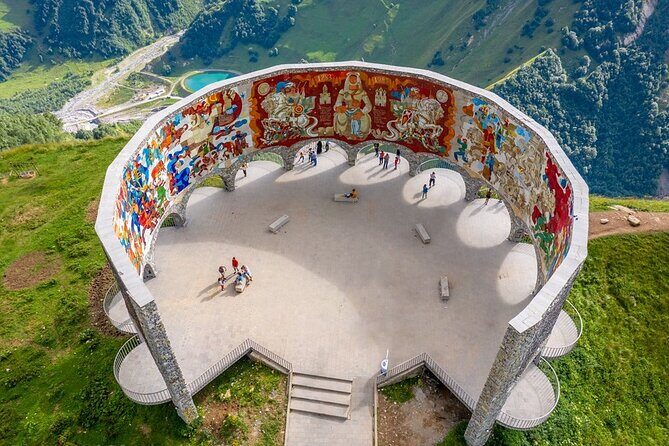
- Russian–Georgian Friendship Monument: Cold War-era murals and big mountain angles
- Gergeti Trinity Church: the main reason many people do this day trip
- Should you pay for the 4WD?
- Kvemo Mleta dinner stop: traditional food, but plan for the bill
- What can go wrong (and how you protect yourself)
- 1) Weather
- 2) The day is long
- 3) Budget add-ons
- Who this tour suits best
- Should you book this Kazbegi day tour?
- FAQ
- How long is the Tbilisi to Kazbegi day tour?
- What’s included in the tour price?
- Do I have to pay extra to reach Gergeti Trinity Church?
- Is food included?
- What stops are included on the route?
- How big are the groups?
- What happens if the weather is bad?
Key highlights worth planning for
- A full Kazbegi greatest-hits day from Tbilisi without renting a car
- Honey tasting along the route, not just another photo stop
- Time at multiple “checkpoint” sights on the Georgian Military Highway
- Gudauri timing works well even outside ski season for clean mountain views
- Gergeti Trinity Church is the main event, reached via optional 4WD
- Tickets for several stops are included, so the day feels smoother financially
Price and Logistics: how $14 turns into real value
Let’s talk value first, because this tour is priced like a budget win—yet it still tries to cover the hard part: getting you safely and comfortably from Tbilisi up into the Kazbegi region.
At $14 per person (with a max group size of 17), you’re getting:
- Round-trip transportation from central Tbilisi in an air-conditioned vehicle
- A guide plus organized stops
- Admission included for multiple key sights
- Honey tasting
- Storage for up to 40 kg of luggage
Now the important part: what’s not in the price. Meals aren’t included, and Gergeti Trinity Church’s final approach via 4WD is optional but priced (20 GEL per person). That doesn’t make the tour “bad”—it’s just the math. If you’re the type who wants a simple, guided day and you’re willing to pay for the last mountain ride and your meal, this is a strong deal.
The day runs about 9 hours, starting at 9:00 am and ending back at the starting point. Expect a proper long day with mountain roads and frequent out-and-in moments.
You can also read our reviews of more tours and experiences in Tbilisi.


From Tbilisi onto the Georgian Military Highway
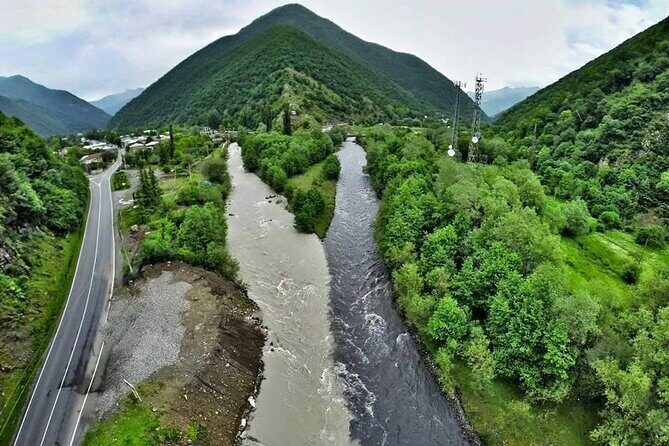
The route is the point. Once you leave Tbilisi, you follow the Georgian Military Highway corridor—one of the easiest ways to understand why Kazbegi is famous. You’ll keep seeing changing terrain: reservoirs, fortress walls, ski-town plateaus, big Cold War-era monuments, and finally the Kazbegi skyline.
It’s also why this tour feels efficient. Instead of jumping around Georgia, you get a single road that links major stops with minimal decision-making. You just show up, follow the group, and soak in the views.
Small group feel
Even on a packed itinerary, a group of up to 17 tends to move better than the big-van style tours. You’re less likely to feel like you’re sprinting through sights with strangers. It also helps for the guided parts—your guide can keep the energy up without losing everyone to gaps.
Zhinvali Water Reservoir: a Soviet dam with a ghostly church
Your first meaningful stop is Zhinvali (Jinvali) Water Reservoir, sometimes called Zhinvali Lake. You’ll drive here along the same corridor that connects Tbilisi outward to the mountains.
Here’s what makes this place more than a pretty water break:
- The dam was built in the 1980s to supply Tbilisi with water as the city grew.
- Older Zhinvali was flooded—people displaced, buildings submerged, and much of the earlier town swallowed under meters of water.
- In winter, when water levels drop, you may still see a small portion of the old Zhinvali, including a church that surfaces from beneath the waterline.
You’ll have about 15 minutes, with an admission ticket included. That short window is intentional. The “wow” here is the story and the contrast: modern infrastructure, plus the idea that the past is still partially visible when nature and seasons cooperate.
Practical tip: if you like moody, atmospheric views, this is one of the best “quick stops” for photos. Bring a light layer—this area can feel colder than the city once you’re up into the mountains.
Ananuri Fortress: 17th-century walls and 18th-century power shifts
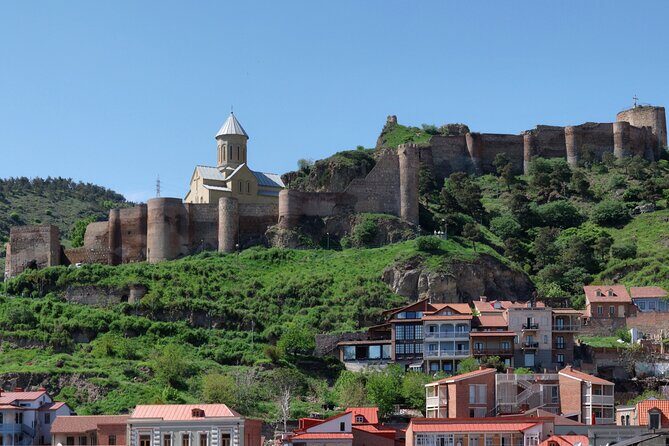
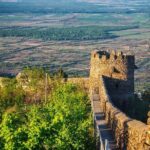
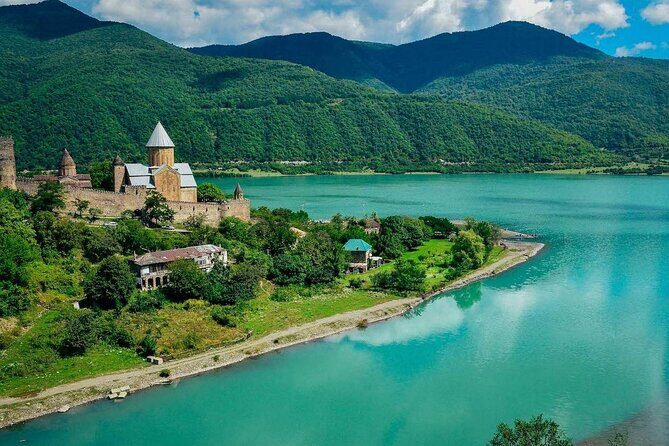
Next up is Ananuri Fortress, a 17th-century architectural ensemble positioned about 70 km from Tbilisi.
Ananuri is the kind of place where the stones make sense once you know the political drama. This site was considered one of Georgia’s stronger fortresses, and it shows up on the map of regional conflict:
- In 1739, Ananuri was attacked by forces from a rival duchy under Shanshe of Ksani, and the fortress was set on fire.
- The Aragvi clan was massacred.
- A few years later, local peasants revolted against Shanshe and invited King Teimuraz II to rule directly.
- Then in 1746, Teimuraz had to suppress another peasant uprising, with help from King Erekle II of Kakheti.
- The fortress stayed in use until the early 19th century.
- It has been on the tentative list for UNESCO consideration (as noted in 2007).
You’ll get about 30 minutes, and admission is free for this stop.


What to watch for during your time
With a half-hour, you’re not meant to become an archaeologist. Instead, focus on:
- the fortress layout and how it sits above the water/valley corridor
- the way the architecture reflects defensive planning
- any viewpoints that give you a sense of scale
Why I like this stop for a day tour: it’s a real “time machine” moment, and it doesn’t eat your schedule the way some longer castle visits can.
Gudauri: ski resort energy without needing ski gear
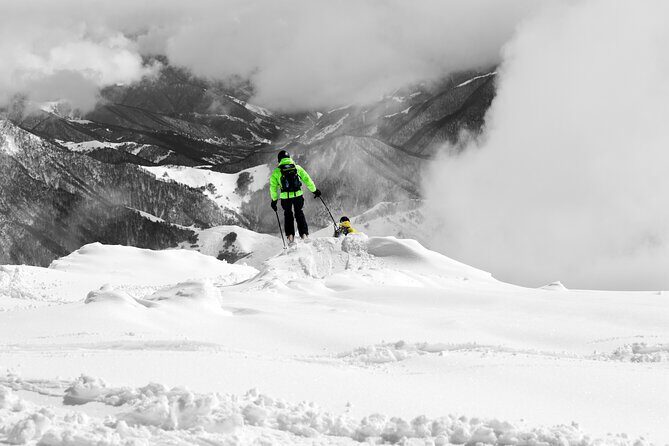
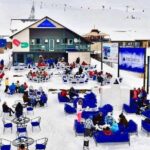
After Ananuri, you reach Gudauri, the mountain resort area in the Kazbegi region. You’ll drive roughly 120 km from Tbilisi, and you’re at about 2,196–2,200 meters elevation near the Cross Pass / Jvari Pass zone.
Even if you’re not skiing, Gudauri works because it’s built for views:
- It’s on the south-facing plateau of the Greater Caucasus mountain range.
- The higher elevation gives you sharp air and wide visibility when the weather behaves.
- Ski season is generally December to April, with some skiing possible in May in higher lifts or in snow years.
The stop is about 1 hour, and admission is free. Think of this as your breathing-and-photo break before the more serious sights.
Practical tip: if it’s sunny, you might feel warm in direct light but still be cold when you stop moving. Wind up here can cut fast, so pack a layer you can zip up quickly.
Russian–Georgian Friendship Monument: Cold War-era murals and big mountain angles
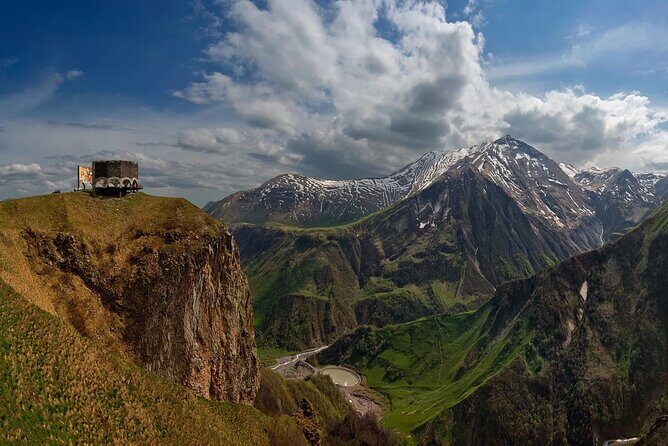
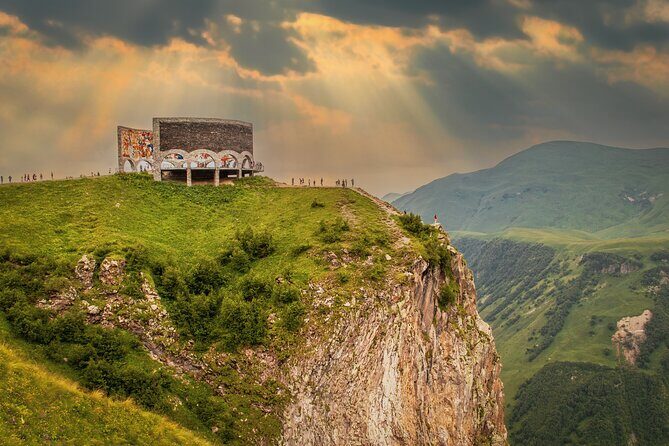
Next is the Russia–Georgia Friendship Monument, also called the Treaty of Georgievsk Monument. It sits on the Georgian Military Highway between Gudauri and the Jvari pass area, overlooking Devil’s Valley.
This stop is only about 30 minutes, but it’s a great reminder that Georgia’s “modern” story is also tied to Soviet-era decisions and symbolism.
Key details:
- Built in 1983 for the bicentennial of the Treaty of Georgievsk
- Meant to celebrate the friendship between Soviet Georgia and Soviet Russia
- The monument is a large round structure (stone and concrete) with an internal tile mural that wraps around the circumference, depicting Georgian and Russian historical scenes
If you’re into monuments, this is one of the more interesting “why does this exist here?” moments on the route. If you’re not, it still gives you a viewpoint break, and it’s usually good for a quick photo with the valley behind it.
Gergeti Trinity Church: the main reason many people do this day trip
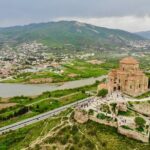
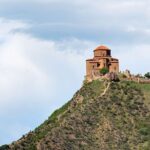
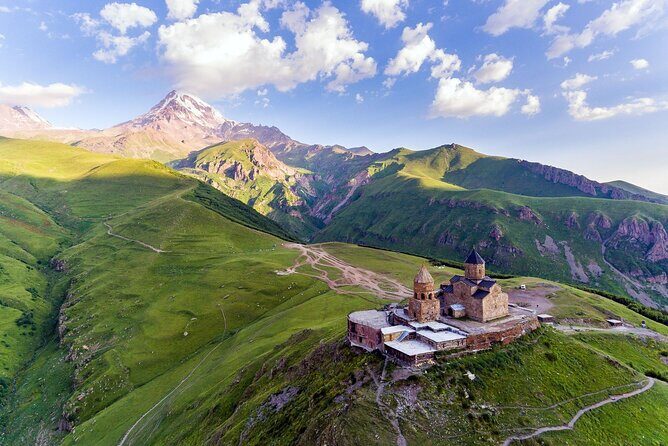
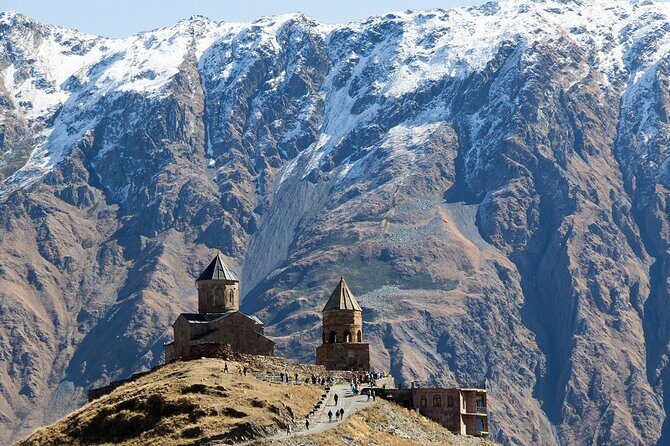
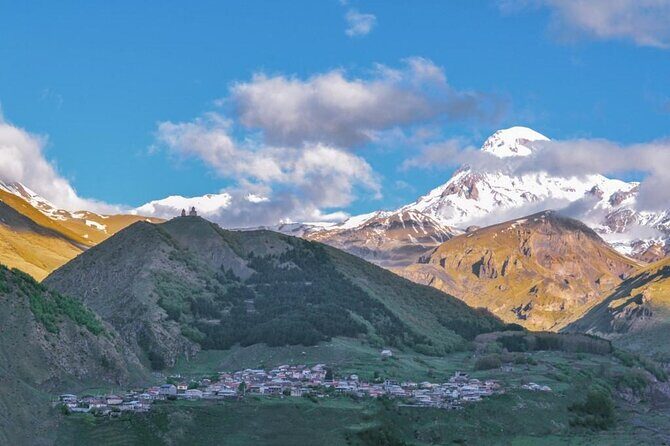
Finally, the day’s centerpiece: Gergeti Trinity Church near Stepantsminda (Kazbegi).
Important reality check: you’ll usually switch to 4WD off-road for the last stretch up. The extra cost is 20 GEL per person. If you do it, you’ll get closer to the church area and the classic viewpoints.
Here’s what you’re seeing:
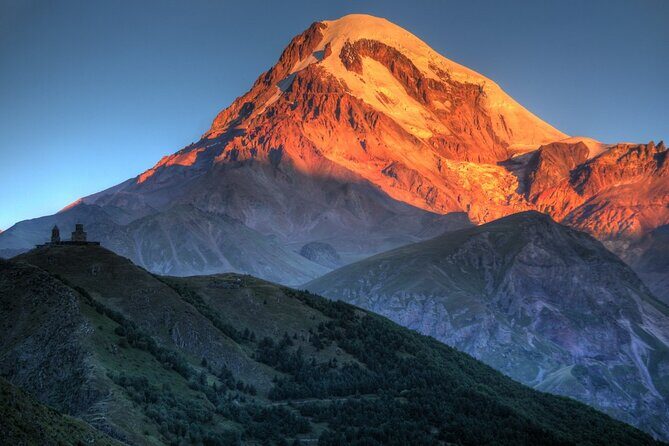
- The church dates to the 14th century and sits at about 2,170 meters.
- It’s under the 5047-meter Kazbegi mountain, with wide mountain views and a dramatic setting above Stepantsminda.
- Historically, it wasn’t only religious. During invasions, it served as a hiding place for national treasures—because it was hard for enemies to reach.
- An 18th-century Georgian author, Vakhushti Batonishvili, wrote that during times of danger, relics from Mtskheta (including Saint Nino’s Cross) were brought here for safekeeping.
- During the Soviet era, religious services were prohibited, but the site still became a tourist destination.
You’ll have about 1 hour, and admission is included.
Should you pay for the 4WD?
If you want the best payoff with the least stress, yes—pay for the 4WD. This is the moment the tour earns its reputation. It’s also the part most affected by weather and road conditions. When visibility is good, Gergeti is unforgettable.
Practical tip: wear grippy shoes. The approach and the church area can be uneven, and you’ll be doing short walks in mountain air.
Kvemo Mleta dinner stop: traditional food, but plan for the bill
Your last scheduled “proper break” comes at Kvemo Mleta, where you stop for dinner. This is about 1 hour, but dinner isn’t included in the tour price.
The restaurant serves traditional mountain-style food, and khinkali is mentioned as a highlight here. So yes, this is your chance to eat something Georgia-style without hunting for a place after a long day.
If you’re doing the math, there’s also an estimated total food and drink cost of about $8 per person, depending on what you order. In practice, you’ll want to be ready with cash for meals and any extra snacks you want.
What I’d do: eat earlier if you’re hungry, then treat this as the warm end to a long road day. When you’ve been in transit all day, waiting too long to eat can make the final hours feel tougher than they need to.
What can go wrong (and how you protect yourself)
No tour runs perfectly every time—especially in mountains. Still, you can control how prepared you are.
Here are the main issues I’d watch for:
1) Weather
The tour requires good weather. If conditions are poor, the operator will offer a different date or a full refund. That’s the right approach for mountain areas, and it also means you shouldn’t assume every day will be picture-perfect at Gergeti.
2) The day is long
About 9 hours plus mountain driving means you’ll feel it. Bring a small water bottle if you can and plan for breaks. If you’re prone to motion sickness, take it seriously—winding roads can affect some people.
3) Budget add-ons
Even with included tickets and transportation, you’ll likely spend extra for:
- 4WD to Gergeti (20 GEL per person)
- your meal in Gudauri/Kvemo Mleta area
If you plan for those early, the tour stays a bargain. If you don’t, the total cost can creep up after you’re already committed.
Who this tour suits best
This day trip is ideal if you:
- want to see Kazbegi-region highlights with minimal planning
- like guided context for forts, monuments, and churches
- enjoy a fast-paced “hits in one day” style itinerary
- value included tickets and organized transportation over DIY costs
It’s less ideal if you:
- hate long days and prefer slow, unhurried travel
- want flexibility to wander without schedule pressure
- refuse any extra costs once the tour starts (because the Gergeti 4WD is a common add-on)
Should you book this Kazbegi day tour?
If your goal is a classic Kazbegi sampler—Zhinvali, Ananuri, Gudauri, the Friendship Monument, and especially Gergeti Trinity Church—this tour is a smart way to do it. The price-to-coverage ratio is strong, and the route is efficient if you’re staying in Tbilisi.
Book it if you’re okay with:
- a full-day drive
- bringing money for meals
- paying for the 4WD option to make Gergeti truly worth your time
Skip it if you want a relaxed pace, or if you don’t want to handle any on-the-ground extras. For everyone else, it’s the kind of one-day plan that leaves you with real stories—and the Kazbegi viewpoint is usually the payoff you’ll remember long after the car ride.
FAQ
How long is the Tbilisi to Kazbegi day tour?
It runs for approximately 9 hours, starting at 9:00 am and ending back at the meeting point.
What’s included in the tour price?
Transportation and guide service are included, along with honey tasting, admission tickets for some stops, and a place for up to 40 kg of luggage.
Do I have to pay extra to reach Gergeti Trinity Church?
The 4WD ride to the Gergeti church area is optional, and the additional cost is listed as 20 GEL per person.
Is food included?
Food and drink costs are not included. There is an estimated additional budget for meals that varies based on what you order at the restaurant.
What stops are included on the route?
The main stops listed are Zhinvali Water Reservoir, Ananuri Fortress, Gudauri, Russian Georgian Friendship Monument, Gergeti Trinity Church, and a dinner stop at Kvemo Mleta.
How big are the groups?
The tour has a maximum of 17 travelers.
What happens if the weather is bad?
The tour requires good weather. If it’s canceled due to poor weather, you’ll be offered a different date or a full refund.