REVIEW · KUTAISI
Oxygen Paradise A Day Tour to Racha Mountain
Book on Viator →Operated by Tripify · Bookable on Viator
Clifftop views in Racha feel unreal. This day tour brings together a stair-heavy hike and UNESCO-protected churches, with the kind of mountain air you remember. I like that it’s built around both getting outside and slowing down for real Georgian architecture.
What I also like is the way the day is paced with real stops, not just fast photo breaks. You spend time at Tskhrajvari Mountain, Shaori Reservoir, and then the historic sites of Nikortsminda and Barakoni, all with admission listed as free. A practical heads-up: this trip includes a lot of walking and stairs, and if you want to reach the far end of Tskhrajvari, you’ll add about 2 kilometers.
It runs as a private setup, so it’s only your group, with pickup offered anywhere in Kutaisi (including hotels). Drivers also share information during the ride, and you finish back in Kutaisi with restaurant ideas for Georgian classics.
In This Review
- Key highlights worth waking up for
- What you’re paying for in Kutaisi (and why it’s fair)
- Tskhrajvari Mountain: the stairs and the cliff-edge payoff
- Shaori Reservoir near Tkibuli: oxygen paradise at altitude
- Nikortsminda Church: XI-century architecture that still feels real
- Barakoni Temple in Ambrolauri: simple, striking, and worth the time
- Timing, pace, and comfort on a full Racha day
- Pickup from Kutaisi: the easiest start to a complicated day
- Who should book this Racha nature-and-temples tour
- Should you book this Racha day tour?
- FAQ
- Where is the tour pickup point?
- How long does the Oxygen Paradise tour take?
- What sights are included in the day?
- Are admission tickets included for the stops?
- Is there an optional extra walk at Tskhrajvari?
- Is this a private tour?
- How much does the tour cost?
- What is the cancellation policy?
Key highlights worth waking up for
- Tskhrajvari Mountain cliff walk: big views and a stair climb that’s worth planning for
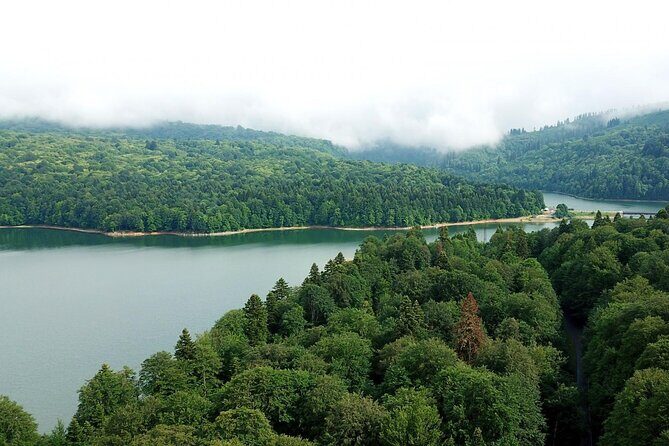
- Shaori Reservoir at 1,100–1,200 meters: forested lake scenery known as oxygen paradise
- UNESCO-linked architecture: Nikortsminda (XI century) plus Barakoni (XVIII century)
- Free admission at the main stops: you’re paying mainly for the day and transport
- Private tour feel with pickup in Kutaisi: easier start than public transit for a full day
What you’re paying for in Kutaisi (and why it’s fair)
At $114 per person for a 7 to 8 hour day, this isn’t the cheapest option on the Georgia route list. But you are paying for a full, structured day: pickup from your Kutaisi location, round-trip transport across Racha, several hours of guided stopping, and time at multiple major sights.
The value piece is that most of the key entrances are listed as free, so your money goes toward the experience and logistics rather than ticket costs stacking up. Add the private setup (only your group) and the day feels like a custom itinerary even though it follows a set order.
Also, expect it to book up: the tour is commonly reserved about 25 days ahead. If you’re traveling in busy season or on a tight schedule, that’s your sign to lock it in early rather than waiting.
You can also read our reviews of more tours and experiences in Kutaisi.
Tskhrajvari Mountain: the stairs and the cliff-edge payoff
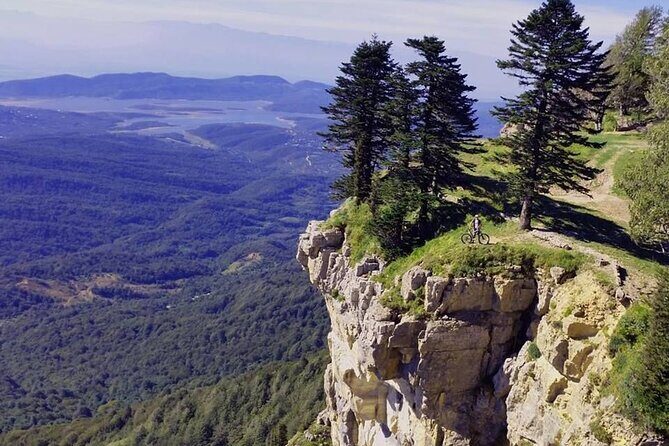
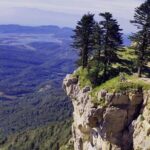
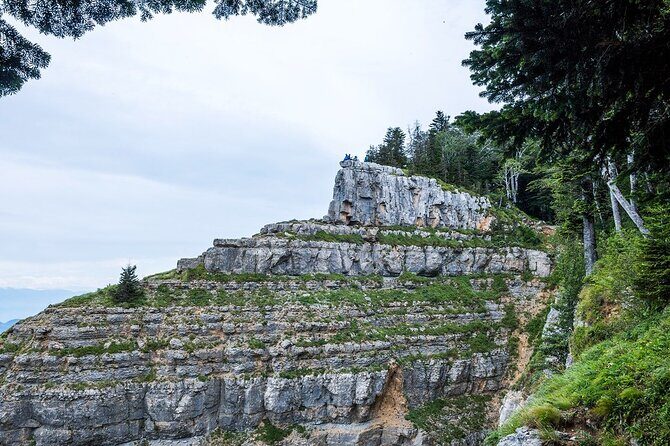
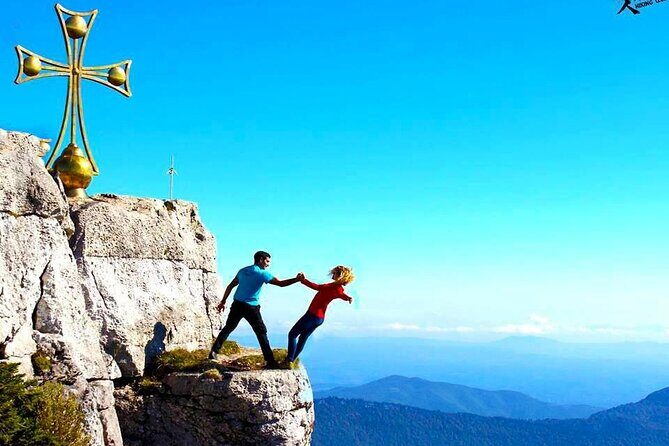
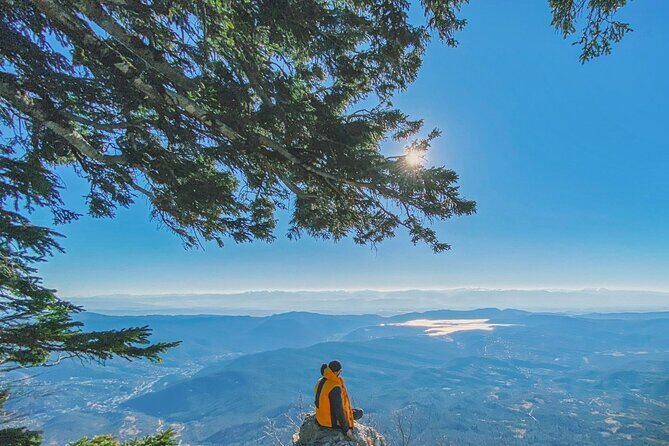
Tskhrajvari Mountain is the kind of spot that makes you stop talking for a minute. The location is on a cliff in Racha, and the experience is all about that otherworldly sense of being high above everything.
You’ll have about two hours here, with admission listed as free. Expect the walk to involve plenty of stairs—one of the most praised parts of the day is exactly that: you earn the view, and the view is the point. If you’re the type who likes a workout with a reward, you’ll appreciate how direct it is.
There’s also an optional choice: if you climb to the end of the Tskhrajvari area, you’ll walk about 2 kilometers more. That’s not a small add-on, so it’s worth deciding based on your energy level that day. If you’re unsure, you can treat it as a “go/no-go” moment once you see how your legs feel.
Practical tip: wear shoes that grip well. This is a cliff setting, and you’ll be moving on foot for an extended time, not just strolling between viewpoints.
Shaori Reservoir near Tkibuli: oxygen paradise at altitude
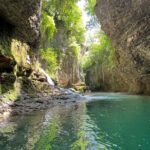
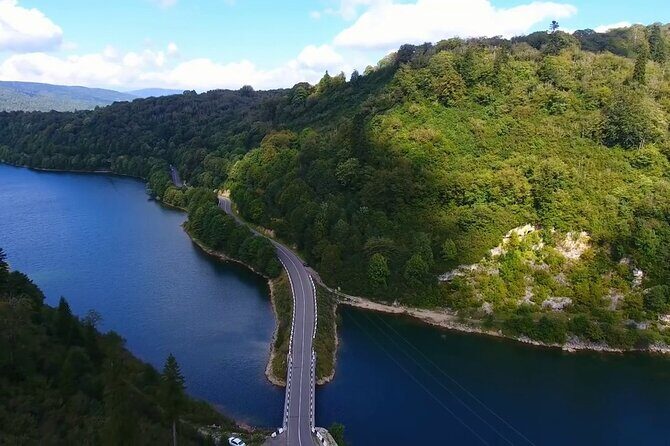
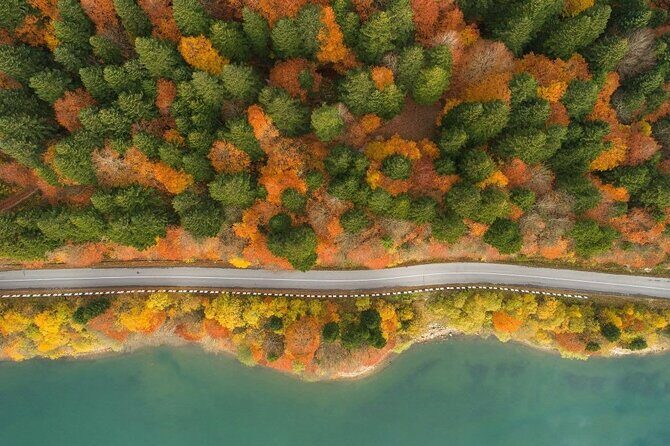
Next comes the natural reset: Shaori Reservoir, reached in the Tkibuli area. This is where the day earns its nickname, because the lake is surrounded by forest and is often called an oxygen paradise.
You’ll get about two hours around the reservoir area, again with admission listed as free. The altitude is noted as roughly 1,100 to 1,200 meters, which helps explain why the air and weather can feel different than Kutaisi. Even when the sky is clear, I’d plan for a light temperature shift and a breeze near the water.
What makes this stop work well in the overall tour is contrast. After Tskhrajvari’s climb, Shaori gives you space to breathe, slow your pace, and take in the forest-lake setting. If you like nature that isn’t just a single viewpoint, this is the stop that satisfies that urge most.
If you come with a camera, you’ll have options: the reservoir and the surrounding trees give you layers for photos, not just one flat “lake shot.” And if you don’t care about photos, it’s still the break your body needs before returning to church architecture.
Nikortsminda Church: XI-century architecture that still feels real
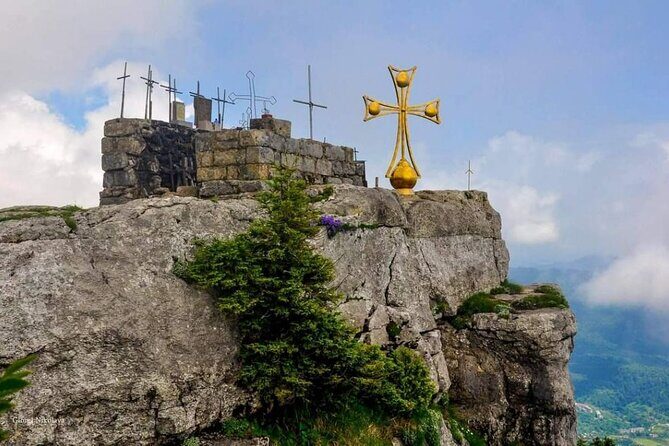
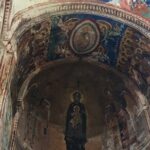
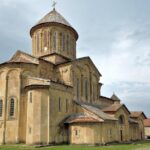
Then you shift from mountain air to stone history at Nikortsminda. This is described as a masterpiece of national architecture, built in the early XI century, specifically around 1010 to 1014.
What I find compelling here is the emphasis on preservation. The monument has not undergone major changes during its existence, and the dome is preserved in its original form. That matters for your experience because you’re not just seeing a ruin—you’re seeing a structure that has kept its character.
You’ll spend about two hours at Nikortsminda, with admission listed as free. The day also connects this site to UNESCO attention: in the 18th century, Nikortsminda Monastery was included in the tentative list of UNESCO World Heritage Sites.
For how to enjoy it: give yourself time to look up and around. The dome detail is a big part of why people write about this place, and you’ll miss it if you only take quick front-facing photos.
Also, if you’re the sort of person who likes architecture explanations, this is one of those moments where a good guide makes the stones feel less like a checklist item. If your guide is someone like Tornike, you’ll likely get a smooth mix of hiking context and architecture focus—one of the best-rated parts of the day.
Barakoni Temple in Ambrolauri: simple, striking, and worth the time
The final historic stop is Barakoni, located in the small town of Ambrolauri in Racha. This is the 18th-century temple you’re meant to spend time with, and it’s described as one of the frequently visited places.
You’ll have about two hours here, with admission listed as free. In other words, it’s not rushed. That matters, because Barakoni is the kind of site where your attention needs a little time to settle on details rather than just getting a quick overview.
The tour notes that this temple is protected by UNESCO. Even if you’re not deep into heritage designations, you’ll feel the difference in the way it’s treated and explained during the visit.
For your enjoyment: expect the tone of the day to shift again. By the time you reach Barakoni, you’ve already walked stairs, climbed to a cliff setting, and taken in Shaori’s forest air. Barakoni offers a calmer finish—stone, time, and a chance to absorb the day instead of sprinting toward the next photo.


Timing, pace, and comfort on a full Racha day
This is a long day by design: about 7 to 8 hours total. The stops are spaced in two-hour blocks, so you should expect a rhythm of travel, then an active part, then a calmer part, then travel again.
Here’s how I’d think about your body on this itinerary:
- Tskhrajvari is the most physically demanding segment, especially if you add the optional 2 kilometers at the end
- Shaori is active in a gentle way—you’re outside, and the altitude can change how you feel
- Nikortsminda and Barakoni are more about walking and standing, with time to look and absorb
Also, you’ll be on a schedule the whole time. It’s private, so you’re not sharing the van with random strangers, but the day still runs as a fixed route with fixed stops.
If you want the views without turning it into a leg-suffering day, plan for pacing from the start. Even if you feel strong at pickup, the stairs at Tskhrajvari can surprise you if you show up underprepared.
Pickup from Kutaisi: the easiest start to a complicated day
One underrated benefit: pickup is offered at your Kutaisi location, including hotels. So you don’t waste time coordinating meeting points or figuring out public transport for a day that runs long.
Because it’s private, the logistics are smoother. Your group only is participating, which often means fewer interruptions during the ride and a more personal explanation at stops.
Drivers provide information during the trip, and the day ends back in Kutaisi with restaurant recommendations for traditional Georgian dishes. That matters if you’d rather spend your evening eating well than guessing where to go after a long day outside.
Who should book this Racha nature-and-temples tour
This trip fits best if you like a day that mixes outdoors with cultural stops. I’d especially recommend it if you:
- want both hiking time and historic church visits in one day
- enjoy scenery that comes with movement, not only a single viewpoint
- like the feeling of walking through Georgia beyond the main city sights
- don’t mind stairs and can handle a longer day outdoors
If you’re trying to avoid any stair-heavy walking, you might find Tskhrajvari tough. The option to end the Tskhrajvari area by adding about 2 kilometers is a good reminder: you can scale your effort, but you still need to be comfortable with walking.
Should you book this Racha day tour?
Book it if you want one of the more satisfying day mixes out of Kutaisi: cliffs and forest, then two architecture stops that connect directly to UNESCO recognition. The free admission at the main sites and the private pickup setup help it feel like solid value for a full day.
Skip it (or choose a different style of tour) if you strongly prefer flat, low-walking sightseeing. Tskhrajvari is the trade-off for those cliff views, and the day’s structure expects you to be on your feet for hours.
If you’re excited by the idea of combining air-at-altitude nature at Shaori with XI-century and XVIII-century temples, this is the kind of day that tends to land well—especially for people who like a bit of effort with their scenery.
FAQ
Where is the tour pickup point?
The tour starts from Kutaisi. You can share your location, and the team will pick you up at any place in Kutaisi, including hotels.
How long does the Oxygen Paradise tour take?
The duration is about 7 to 8 hours.
What sights are included in the day?
You visit Tskhrajvari Mountain, Shaori Reservoir near Tkibuli, Nikortsminda Church, and Barakoni Temple in Ambrolauri, then return to Kutaisi.
Are admission tickets included for the stops?
Admission tickets are listed as free for the main stops.
Is there an optional extra walk at Tskhrajvari?
Yes. If you climb to the end of the Tskhrajvari area, you’ll add about 2 kilometers of walking.
Is this a private tour?
Yes. Only your group participates.
How much does the tour cost?
The price is $114 per person.
What is the cancellation policy?
You can cancel for free up to 24 hours in advance for a full refund. If you cancel less than 24 hours before the start time, the amount paid is not refunded.