Dinner in Kutaisi feels like a warm secret.
This experience pairs local hospitality with a real home-cooked meal, where you’ll sit down with Kutaisi locals, talk, taste, and share wine in a humble setting. Break Bread is also English-friendly and capped at 10 people, so it doesn’t feel like a food stop you pass through.
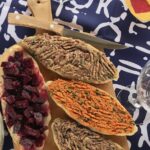
I love that you’re not just eating Georgian dishes, you’re learning how locals think about them while the meal unfolds. You’ll get classics like phkhali (vegetable with walnut, garlic, and pomegranate) and mchadi (crispy corn flatbreads), plus breads filled with cheese or beans. One possible drawback: the exact home address can change based on group size, so you’ll want to keep your directions flexible and arrive a few minutes early.
In This Review
- Key highlights you should care about
- A 7:00 pm Dinner in a Real Kutaisi Home
- Where you’ll meet and how to arrive smoothly
- The Food You’ll Eat: Phkhali, Mchadi, Khachapuri, and More
- Pkhali: vegetables, walnuts, garlic, and pomegranate
- Mchadi: crispy corn loaves with cheese or lobio
- Badrijani: eggplant rolls with walnut filling
- Chicken in baje: chicken in a nut sauce
- Imeruli khachapuri and lobiani: cheese bread plus bean bread
- Salad and simple balance
- Conversation, Wine, and the Small-Group Advantage
- What the wine adds (and how to enjoy it)
- The human side of hosting
- The Rolling Location and Flexible Menu: What Changes for You
- Price and Timing: Is $53.50 Worth It?
- The real-world time plan
- Practical logistics that help your evening go smoothly
- Who Should Book This Kutaisi Dinner (and Who Might Not)
- You might reconsider if…
- Should You Book Break Bread with Kutaisi Locals?
- FAQ
- What is the price of Break Bread with Kutaisi Locals?
- How long does the experience last?
- What time does the tour start?
- Where does the experience meet?
- Is it offered in English?
- Do I get a mobile ticket?
- How many people are in the group?
- Will the location or menu be the same for everyone?
- What food will I eat?
- What is the cancellation policy?
Key highlights you should care about

- Home-based dinner setting: you’re invited into a humble Kutaisi house, not a staged restaurant table.
- Small group (max 10): more conversation, less waiting, and a calmer rhythm for your evening.
- Traditional dishes you can actually pronounce: phkhali, mchadi, badrijani, baje, and khachapuri are all on the sample menu.
- Wine with the meal: the format is built for slow chatting, not a quick tasting flight.
- Practical, human hosting: one host showed real follow-through in a medical situation and even provided follow-up remedy recipes.
A 7:00 pm Dinner in a Real Kutaisi Home
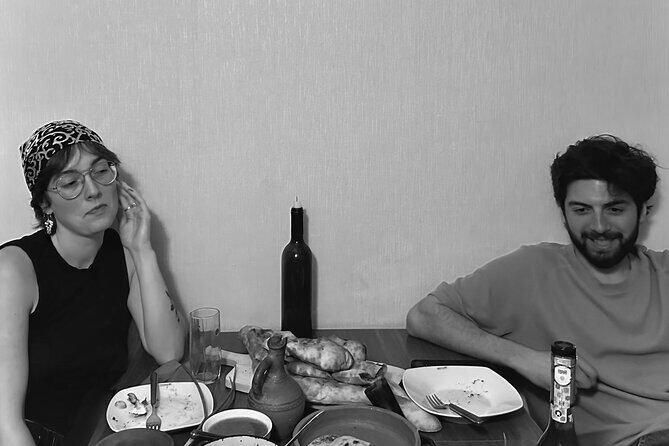
You’re starting this evening at 7:00 pm at the meeting point on Shota Rustaveli Ave (near 7M8Q+P43), and it loops back there at the end. The timing matters in Kutaisi. Night falls fast enough that a home dinner feels cozy rather than rushed, and it’s often the easiest way to spend your evening without hunting for a restaurant that matches your mood.
What makes this tour feel different is the setting. You’re invited into someone’s home, where the evening revolves around conversation and shared plates. That changes the tone right away. In a restaurant, you order and leave. Here, you sit and participate.
You can also expect a group that’s small enough for actual talk. With a maximum of 10 travelers, it’s much more likely you’ll hear stories, ask questions, and get answers that go beyond food trivia. And because it’s offered in English, you won’t have to piece things together with gestures unless you want to.
You can also read our reviews of more tours and experiences in Kutaisi.


Where you’ll meet and how to arrive smoothly
You’ll begin and end at the meeting point on Shota Rustaveli Ave. That’s a simple setup, but I still recommend planning to arrive 5–10 minutes early. If the host needs to coordinate a pickup or route for your small group, being on time keeps the evening calm.
Also, the location can shift based on group size. That’s not a red flag; it’s usually a practical one. Just know you might not go to the exact same home address every time, and your host will handle the best arrangement for the number of people.
The Food You’ll Eat: Phkhali, Mchadi, Khachapuri, and More
The meal is built around traditional Georgian comfort food, and the menu is flexible depending on the group. Still, the sample menu gives you a solid picture of the dishes and flavors you’ll likely see.
Here’s how to read the menu so you know what to expect on your plate:
Pkhali: vegetables, walnuts, garlic, and pomegranate
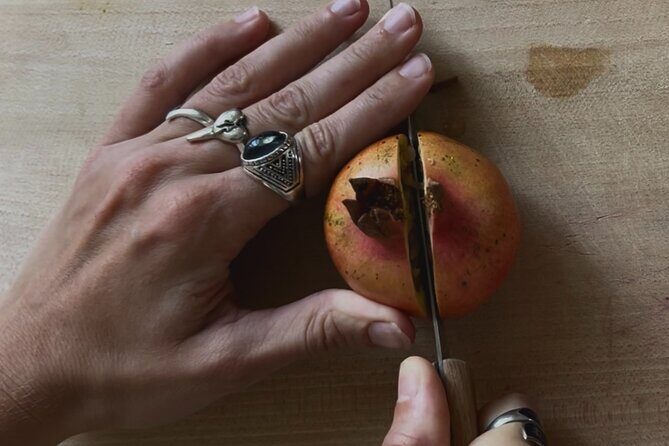
Pkhali is a vegetable dish shaped by nuts and brightness. It’s typically grounded vegetables such as aubergine, spinach, red pepper, or beetroot, seasoned with walnuts, garlic, onion, and herbs, and finished with pomegranate seeds. I like it because it hits multiple notes at once: earthy, nutty, herbal, and then a little pop of tart fruit.
If you’re new to Georgian food, this is a great entry dish. It’s not just a side. It’s a centerpiece that shows how Georgian cooking balances rich ingredients with a fresh finish.
Mchadi: crispy corn loaves with cheese or lobio
Mchadi are small, crispy loaves made from cornflour, milk, and water. Traditionally, locals eat them with cheese like sulguni or with lobio (bean stew). I love this because it’s humble food with clear personality. Think warm, crisp edges, and the kind of bread that turns a meal into a full experience rather than a plate of bites.
If you’re the type who enjoys eating bread as part of the meal structure, you’ll appreciate mchadi here.




Badrijani: eggplant rolls with walnut filling
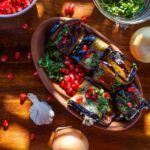
Badrijani are fried eggplant rolls filled with walnuts plus spices and herbs. It’s rich food, and it carries a deep savory flavor thanks to the nuts and herbs. I find eggplant rolls especially satisfying because you get a neat portion that still feels special.
If you don’t like nut-heavy fillings, this might be the one dish you’ll want to ask about. Otherwise, it’s classic Georgian comfort.
Chicken in baje: chicken in a nut sauce
Chicken in baje is boiled or fried chicken coated in grounded nut sauce. The nut base is the point here. It makes the sauce thick, aromatic, and comforting without needing a fancy garnish to taste complete.
Imeruli khachapuri and lobiani: cheese bread plus bean bread
You’ll likely see either or both of these breads:
- Imeruli Khachapuri: cheesy bread, a flatbread made with leavened dough and filled with cheese.
- Lobiani: bean-filled bread.
I like that these breads give you structure. You’re not only tasting separate dishes; you’re also sampling the Georgian bread tradition that shows up in daily life.
Salad and simple balance
A traditional salad on the side usually means cucumbers, tomatoes, red onion rings, parsley, and olive oil. It’s not the dramatic part of the meal, but it helps cut through the richer dishes. You’ll likely appreciate the reset, especially if you’re eating multiple mains back-to-back.
Conversation, Wine, and the Small-Group Advantage
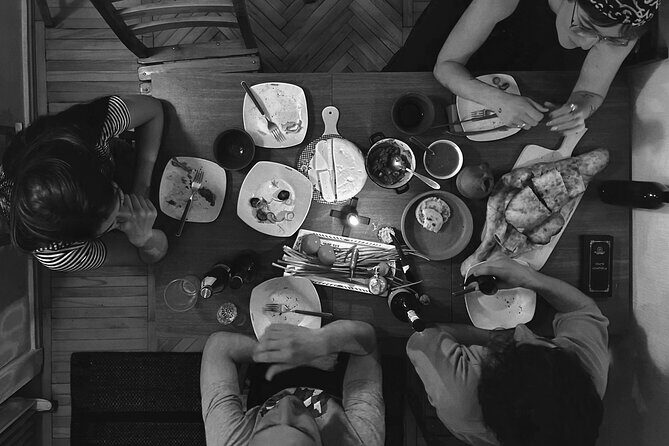
This evening is designed for slow conversation. The overview emphasizes plates, wine, and storytelling, and that matches the small-group setup. When the group is capped at 10, the host can actually keep the rhythm personal. Questions don’t get lost. You can follow the story thread.
I also like the tone of the hosting style here. It’s not stiff. You’re sharing food and talking with people who actually live the culture you came to see. That’s the difference between a meal and an experience.
What the wine adds (and how to enjoy it)
Wine shows up as part of the evening format, described as fine wines. I’d treat it as an encouraged add-on, not a hard requirement. Even if you only sip, it usually makes the conversation feel more relaxed.
A practical tip: pace yourself. You’re in a home, you’ll likely be offered multiple dishes, and you may walk back after. Drinking too fast turns a cozy dinner into a late-night shuffle.
The human side of hosting
One reason this style of tour earns trust is the level of care shown when something goes wrong. In one account, the host went out of her way to take a sick guest to a pharmacy, got medication sorted, and followed up afterward with kidney stone remedy recipes. That doesn’t mean it will happen for every person, but it does tell you the host relationship isn’t superficial. It’s personal.
The Rolling Location and Flexible Menu: What Changes for You
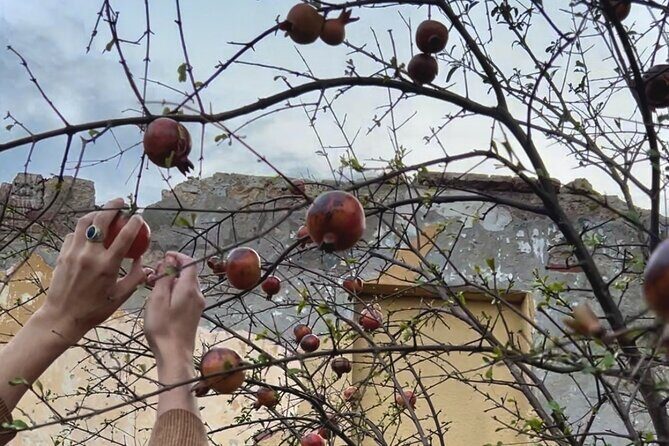
The activity location is changeable depending on how many people book. The menu can also change based on group size. That means your evening might not look like a perfectly identical photo each time.
Instead of treating that as uncertainty, treat it as a sign the dinner is built around real home logistics. In a large-group restaurant, the menu stays fixed. In a home setting, the menu adapts so the host can manage cooking and serving. If you hate surprises, you might find this annoying. If you like authenticity, you’ll probably find it refreshing.
Here’s what stays consistent:
- You’ll still be served traditional Georgian dishes
- You’ll still be in a home dinner setting
- You’ll still get the core structure: shared plates, conversation, and wine
And here’s what you might vary:
- The specific vegetables in phkhali
- Which bread types show up
- Whether you get one chicken format versus another depending on what’s manageable
If you have dietary restrictions, I’d plan to communicate clearly when booking. The tour data says the menu is changeable, which suggests there’s some flexibility, but it’s still a good idea to ask up front so you don’t end up stressed mid-meal.
Price and Timing: Is $53.50 Worth It?
At $53.50 per person for about 3 hours, this is priced like an experience more than a meal-only deal. The value comes from three things you’re paying for:
First, you’re paying for access. Getting invited into someone’s home is the whole product. That’s hard to replicate on your own without an introduction.
Second, you’re paying for a curated spread. Even the sample menu is not a single dish. It’s multiple mains plus bread, salad, and wine as part of the evening.
Third, you’re paying for small-group time. With a maximum of 10 people, the host isn’t juggling a crowd. That makes your evening feel like you’re part of the table, not a spectator.
If you’re comparing this to a typical restaurant dinner in Kutaisi, you might spend a similar amount and still not get the same payoff. In this format, the conversation and cultural exchange are part of the ticket price, not an accidental bonus.
The real-world time plan
You start at 7:00 pm. Expect a dinner that runs close to 3 hours. That usually makes this tour ideal for the day you don’t want an overly packed schedule. If you’re already tired from sightseeing, this is the kind of plan that slows you down.
Practical logistics that help your evening go smoothly
A few small facts make a big difference in comfort.
- You’ll get a mobile ticket.
- It’s offered in English.
- Service animals are allowed.
- It’s near public transportation.
- Most people can participate.
- It’s capped at 10 travelers.
That combination means you can treat this as a low-stress evening plan, even if you don’t know the city well yet. Public transport access helps if you’re coordinating with your hotel schedule.
Also, the activity ends back at the meeting point. That’s convenient. You won’t be wondering how to get back at midnight after dinner.
Who Should Book This Kutaisi Dinner (and Who Might Not)
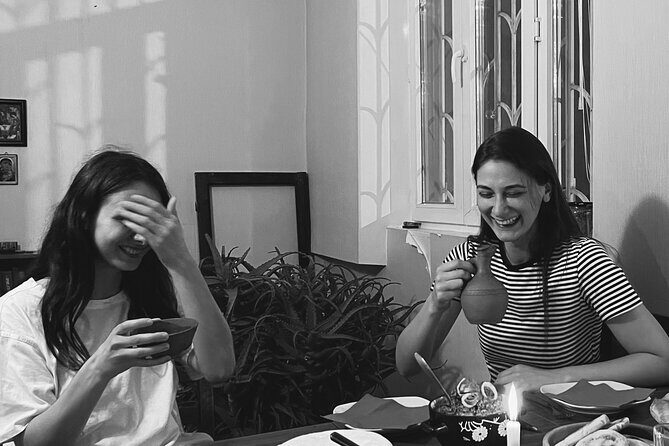
This experience is a strong match if you want authentic food without chasing street-food chaos. If you like meals where you talk with the people around the table, you’ll probably enjoy it. The dish list also fits a lot of tastes: nut-based vegetarian options (phkhali, badrijani) and meat-based mains (chicken in baje), plus the bread tradition (khachapuri, lobiani).
It’s also a good pick for visitors who want a smaller, calmer plan. With only up to 10 people, you’ll get a better chance at meaningful conversation than you would in a big group tour.
You might reconsider if…
If you’re in a hurry, this isn’t the right fit. It’s a dinner, designed to last around 3 hours. Also, if you have strong allergies or dietary restrictions, you’ll need to communicate carefully when booking since the menu can change.
Should You Book Break Bread with Kutaisi Locals?
Yes, if you’re looking for a real Kutaisi evening. I’d book it when you want something that goes beyond eating and turns into a shared moment with local hosts. The small group cap, the home setting, and the specific traditional dishes on the menu add up to solid value for $53.50.
I’d also feel comfortable booking this as a solo option or a couple plan because the structure is built for interaction. If you’re social, you’ll likely have a great night. If you’re quieter, you’ll still get fed well and guided through the food.
One last tip: plan to arrive early and loosen your schedule. When you show up with patience, the best part of this tour happens naturally—conversation, plates shared at a home pace, and Georgian flavors that feel personal.
FAQ
What is the price of Break Bread with Kutaisi Locals?
It costs $53.50 per person.
How long does the experience last?
The duration is approximately 3 hours.
What time does the tour start?
The start time is 7:00 pm.
Where does the experience meet?
The meeting point is listed as 7M8Q+P43, Shota Rustaveli Ave, Kutaisi, Georgia.
Is it offered in English?
Yes, it is offered in English.
Do I get a mobile ticket?
Yes, it includes a mobile ticket.
How many people are in the group?
The maximum group size is 10 travelers.
Will the location or menu be the same for everyone?
The location can change based on the quantity of people. The menu is also changeable based on group size.
What food will I eat?
A sample menu includes phkhali, salad, mchadi, badrijani, chicken in baje, imeruli khachapuri, and lobiani.
What is the cancellation policy?
You can cancel for free up to 24 hours in advance for a full refund. If you cancel less than 24 hours before the start time, the amount you paid will not be refunded.